Giving a Keyboard as a Gift? What to Pair With It
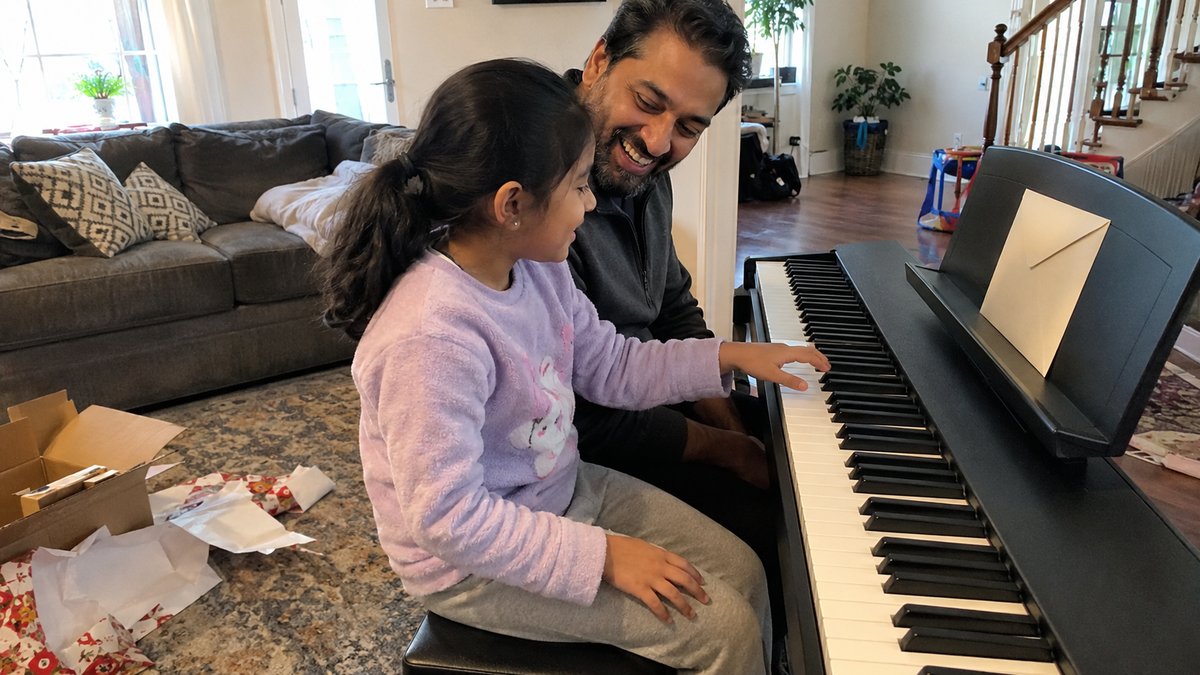
Some gifts are easy to get right. A keyboard is not one of them, which is exactly why it is worth giving. A keyboard says something a sweater never will: I think you could make music. For the kid who hums through dinner, the partner who keeps pausing piano videos on their phone, or the parent who always said they would learn someday, that message can land harder than the gift itself.
Here is the honest part, though. A lot of gifted keyboards go quiet by February. Usually it is not because the keyboard was wrong. It is because the keyboard arrived alone: no decent place to sit, no pedal, no way to practice without an audience, and no plan for what to actually do in week one. The difference between a keyboard that gets played and a keyboard that becomes furniture is almost never the instrument.
So this is the pairing list. It is short, most of it is inexpensive, and the last item matters more than all the hardware combined.
A Quick Check on the Keyboard Itself
If you have not bought the keyboard yet, two specs matter more than the brand on the box. The first is touch sensitivity: the keyboard should play louder when a key is struck harder, the way a real piano does. Some entry-level models skip this, and they teach habits a student has to unlearn. The second is really two separate specs, and it helps to keep them apart. Key count comes first: 61 keys is a workable start, and 76 or 88 keys gives more room as pieces grow. Key action is the other one: a fully weighted or hammer action gives the real-piano resistance serious students eventually need, and plenty of 88-key models ship with a light synth action instead, so check the action as well as the number of keys. Our guide to digital pianos vs. keyboards for beginners walks through the trade-offs in plain English if you are still deciding.
If the keyboard is already wrapped, do not second-guess it. A touch-sensitive 61-key model is plenty for the first six months to a year, and a good teacher will work with whatever is in front of the student.
A Stand and Bench at the Right Height
A common setup goes like this: the keyboard lives on the kitchen table, and the student plays from a dining chair that is two inches too tall. Piano technique is built on relaxed shoulders, level wrists, and forearms roughly parallel to the floor, and a bad height bakes tension into a beginner’s hands from day one.
As of 2026, an adjustable X-style keyboard stand usually runs $25 to $60, and that is what most beginners use. A Z-style stand is the heavier column-and-base design, sturdier and typically about $100 or more. An adjustable padded keyboard bench runs about $40 to $70, and a full adjustable piano bench starts around $100. The test takes ten seconds: seated with hands resting on the keys, forearms parallel to the floor, shoulders down. If the recipient is a growing kid, adjustability is not optional, because the right height this year is the wrong height next year.
A Real Sustain Pedal
Plenty of keyboards ship with no pedal at all, or with a small plastic footswitch about the size of a bar of soap. The footswitch technically works, but it skates across hard floors mid-song, which is exactly as maddening as it sounds.
A piano-style sustain pedal with a rubber base usually costs $20 to $40 and earns its keep early. Sustain, the effect of notes ringing on after the fingers lift, shows up in beginner pieces within the first couple of months, and it is the cheapest way to make early playing sound rich instead of choppy. For a beginner, sounding good is fuel. One quick check before buying: make sure the keyboard has a pedal input jack (nearly all do).
Headphones: The Family-Peace Gift
This one is the sleeper. Almost every keyboard has a headphone jack that silences the built-in speakers, which means a beginner can practice at 6:30 in the morning or 10 at night without negotiating with the rest of the household.
New players are self-conscious, and self-conscious players practice less. Headphones make practice private: the wrong notes, the slow repetitions, the same four measures fifteen times in a row, all for an audience of zero. For some adult beginners, headphones are the difference between practicing daily and barely practicing at all.
A basic pair of closed-back headphones from about $30 is plenty to start, and $50 to $100 buys noticeably better comfort for long sessions. One practical detail: many keyboards use a quarter-inch headphone jack, so add a quarter-inch adapter if the headphones come with the standard small plug.
What You Can Skip
In the interest of honesty, a few popular add-ons are not worth your money. Letter stickers for the keys feel helpful but become a crutch, and most teachers eventually ask students to peel them off. The thick teach-yourself-piano book bundles mostly go unread past the second chapter. Accessory kits stuffed with cleaning cloths and dust covers are padding. The real list is short: somewhere proper to sit, a pedal, headphones, and a reason to keep sitting down.
The black keys already do the job the stickers were bought for. Travis S., who teaches piano on Tunelark, uses their pattern to find any note on the keyboard, with no need to memorize all 88 keys and nothing to peel off later.
Skill video · Finding Any Note on the Keyboard
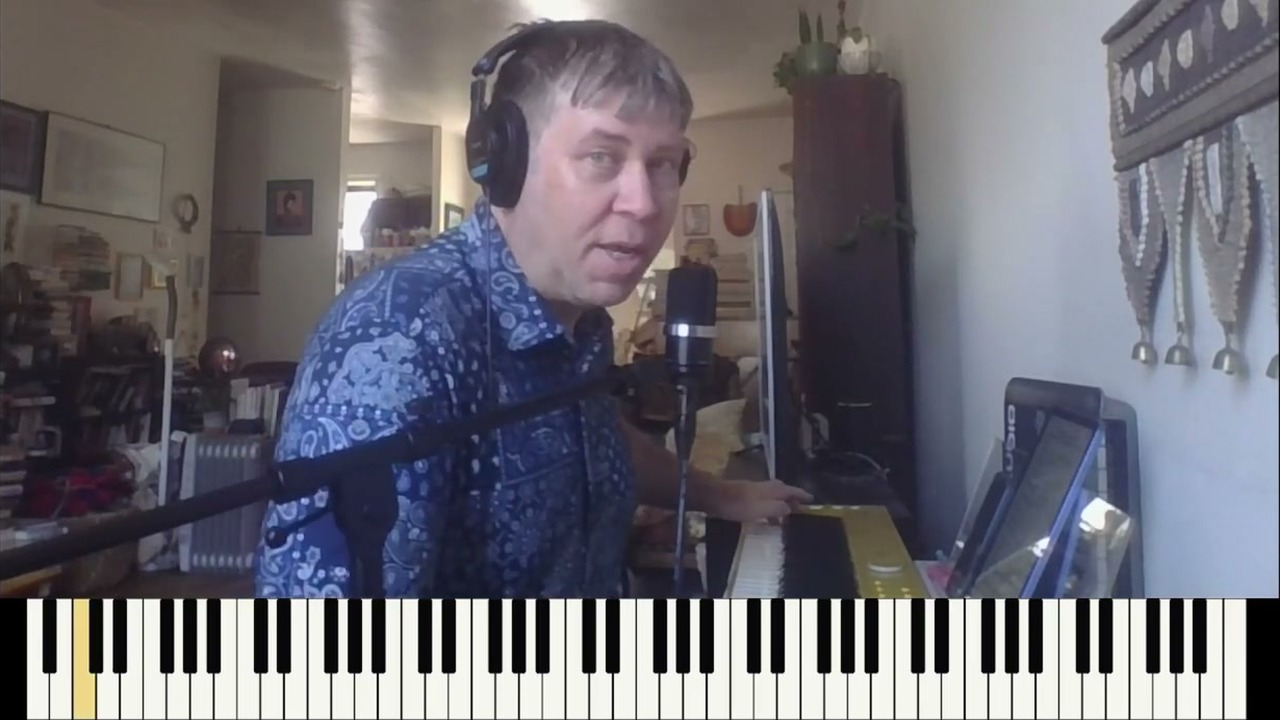
Travis teaches piano lessons online with Tunelark. View Travis’s profile
The Pairing That Keeps It Played: Lessons
Here is the pattern behind most abandoned keyboards. The first two weeks are exciting. The third week is confusing. By the fourth week, nobody knows what to practice, and the lid stays closed. Motivation rarely dies dramatically; it just runs out of road. A focused set of beginner piano tips can carry a self-starter for a while, but the thing that reliably keeps a new instrument played is a teacher: someone who knows what Tuesday’s practice should look like, notices a collapsing wrist before it becomes a habit, and gives the whole project a weekly heartbeat.
That is why the best thing to pair with a keyboard is not hardware at all. A Tunelark gift card turns the keyboard from an object into a plan. Cards start at $100, and you can choose $100, $500, or any custom amount of $100 or more. The full value becomes lesson credit on the recipient’s account, usable with any Tunelark teacher, for any instrument and any lesson length. If the recipient is new to Tunelark, they get an extra $30 in lesson credit when they use the card to book their first lesson, so a $100 card becomes $130. For a recipient new to Tunelark the first lesson is free; a current student gets $25 off their first lesson with a teacher they have not worked with before, paid from the card.
The math works out neatly. The most common price for a 30-minute lesson is $44, so for a new student the first lesson is free, two more full lessons cost $88, and $42 is left toward a third: about four lessons from a $100 card. Teachers set their own rates, $39 to $65 for 30 minutes as of 2026, so the exact count depends on the teacher. That is the window where a keyboard becomes a habit instead of a shelf.
The teachers are why this works. Every Tunelark teacher is vetted by working musicians and educators for teaching quality before they can list, and many hold degrees from schools like Juilliard, Eastman, Berklee, and the Manhattan School of Music. Lessons happen one-on-one over video chat, which pairs naturally with a keyboard already set up at home. If the first teacher is not the right fit, the student can pick a different one and try again at the same trial discount, which is what makes a second try low risk. For a child, lessons also include free access to 150+ educational music games, and if you are not sure your recipient is old enough yet, our guide to the best age to start piano lessons for kids is a useful gut check. For an adult, it helps to know what the first 30 days at the piano actually look like and how long it really takes to learn piano, so expectations do not collapse in week three.
And if you want the wider view, including how gifted lessons work for other instruments and other kinds of recipients, our full guide to giving music lessons as a gift covers all of it.
How to Give Piano Lessons as a Gift on Tunelark
If you want the keyboard to arrive with momentum built in, the whole process takes about two minutes:
1. Choose an amount at tunelark.com/gift-cards: $100, $500, or any custom amount of $100 or more.
2. The card arrives by email, usually within minutes. Print it and tuck it in with the keyboard, or forward the email if you are gifting from a distance.
3. The recipient picks their teacher and books a first lesson. If they are new to Tunelark, an extra $30 in lesson credit is added when they book that first lesson with the card.
4. The balance does the rest. Lesson costs come out of the credit automatically, and any leftover balance applies to upcoming lessons on its own.
A few reassurances, because gift-givers worry: the credit never expires, it works for any of the 45+ instruments and skills on the platform in case the piano dream evolves, and nothing locks the recipient into the first teacher they try.
Frequently Asked Questions
Is a 61-key keyboard enough to start lessons?
Yes. A touch-sensitive 61-key keyboard covers the first six months to a year of lessons comfortably, and teachers start students on them all the time. Key count and key action are two separate specs, and both are worth checking before you buy. By the time an upgrade on either one matters, the student will have earned it. The one thing to rule out at any size is a keyboard without touch sensitivity, since playing soft and loud is part of music from the very first lesson.
How does the gift card actually arrive?
By email, usually within minutes of purchase. There is no shipping and nothing to wait on: you can print the card and tuck it in with the keyboard for the unwrapping moment, or forward the email directly to the recipient. That also makes it one of the few meaningful gifts that still works when the occasion is tomorrow morning.
What if the recipient already takes piano lessons?
The card still works. The full face value becomes lesson credit they can use with any Tunelark teacher, and the balance applies automatically to their upcoming lessons. One honest note: the extra $30 in credit is only for recipients who are new to Tunelark and book their first lesson with the card, so an existing student receives exactly the face value.
What if they do not start lessons right away?
Nothing is lost. Tunelark gift card credit never expires, so the card waits patiently through a busy spring or a slow start, and the full value is still there whenever they are ready, even if ready turns out to be next fall.
How much should I put on the card?
$100 is the minimum and becomes $130 for a new student, which is most of a month of weekly lessons at the typical $44 rate; the arithmetic is in the lessons section above. If you would rather give the gift of music lessons for a season instead of a month, $500 covers several months of weekly lessons, and custom amounts of $100 or more can go higher still. Someone who wants to fund a whole year of weekly lessons can do exactly that.
Looking for an online piano teacher? See our full Online Piano Lessons page for everything you need to know about getting started.
Keep reading
About Jennifer Heath
I'm Jennifer Heath, VP of Operations at Tunelark and a lifelong singer. I joined the company in 2020 and oversee much of what makes Tunelark work for students and teachers: hiring, training and supporting our instructors, student support, marketing and day-to-day operations. I started voice lessons at 7 and sang with touring choirs through my teens. Music belongs in every life, for the self-expression, the discipline, the comfort and the simple joy of it.