When Your Playing Stops Improving, the Answer Usually Isn’t Practicing Harder
Most students who stay with an instrument long enough meet the same wall. For weeks, maybe months, the line went up. The piece got cleaner, the hands got faster, and the practice felt alive because every session left them a little further along than the last one. Then, quietly, it stops. They sit down with the same piece, put in the same time, and nothing moves. The thing that felt like flying a month ago now feels like pushing a stalled car uphill.
The instinct at that point is almost universal, and it is the instinct to grind. If the progress slowed, the reasoning goes, then surely the fix is more repetitions, more drilling, more time on the exact passage that refuses to come together. So the student doubles down on the very thing that has stopped paying off. And the harder they push, the more the pleasure drains out of the practice, until one day the case simply stays closed.
Harry B., a guitar teacher at Tunelark, has watched this pattern play out enough times to hold a firm and slightly contrarian opinion about it. His view runs almost directly against the grind-it-out instinct. To Harry, a plateau is not a verdict on the student, and it is not a signal to attack the same material with more force. It is a piece of information. It is the instrument telling you that you have collected most of what this particular passage had to teach, and that the time has come to point your attention somewhere new.
What follows is essentially a working philosophy of plateaus from someone who treats them as a routine, expected, even useful part of learning rather than a crisis to be muscled through.
A plateau is a feeling before it is a fact
Harry does not begin with technique. He begins with how learning feels from the inside, because that feeling is the first thing a student can actually read in themselves.
“The most engaging thing about playing an instrument is the process of learning,” he says. “When we’re learning and making progress we are fully engaged in what we’re doing and we feel inspired to use every spare moment to practice. When we’re not learning, we feel inert, disengaged, and apathetic.”
That flatness is the symptom most students misread. When the energy goes out of practice, the easy conclusion is a personal one: I’ve lost my discipline, or my talent has run out, or maybe I never really loved this after all. Harry reads the same flatness as data rather than diagnosis. The dullness in the practice is not a character flaw. It is an accurate report on where the student currently sits on the learning curve.
And that curve, in his telling, has a shape you can count on. “Plateaus occur when a student has worked enough on a given concept and starts to experience diminishing returns,” he says. “It is so tempting to keep pushing towards our ideal of perfection that is hung in front of us like a carrot on a stick. But once our sense of momentum starts to fade, trust in the work you’ve done and consider moving on to something else.”
Those diminishing returns are the mechanism behind the wall. Early in any new piece or technique, every minute of attention buys a visible gain, because there is so much low-hanging fruit to pick: the shape of the chord, the contour of the melody, the basic coordination of the hands. As the obvious gains get banked, each additional hour on the same material returns a little less than the hour before it. The work is not failing. It is succeeding its way into a region where the gains are smaller and harder to feel. A student who does not know to expect that curve will read the shrinking returns as a problem with themselves, and will respond by pressing harder on exactly the spot where pressing has stopped working well.
Why the teacher sees the wall before the student does
There is a reason a plateau is so hard to recognize from the inside, and it is the same reason a good teacher earns their place in the process. From within a single piece, every day of practice looks like the last one. The student is, in Harry’s words, “down in the weeds.” All they can see is the bar of music that still will not behave, and the natural story to tell about it is that they simply have not drilled it enough yet.
The teacher is standing far enough back to see the whole shape of the climb. “It is hard to see this when you are down in the weeds working on a new piece of music or technical concept,” Harry says, “but as a teacher I can help recognize when the arc of my student’s progress is beginning to plateau. At this point I can introduce something fresh that will challenge them in a new way and help maintain a consistent sense of growth and excitement.”
A teacher’s job is not only transmitting technique. It is also perspective: someone tracking the arc of your progress across weeks and months, who can spot the bend toward flat before frustration sets in, and who has a ready supply of fresh challenges to redirect that energy before it curdles into discouragement. A student practicing alone can certainly learn, but they are flying without that outside vantage point, which is exactly the vantage point a plateau hides from the person living inside it.
The way out is sideways, not straight down
Ask Harry how a student breaks through a plateau, and he does not reach for a harder version of the same drill. He reaches for a different one.
“Yes, plateaus are inevitable,” he says. “The way out is always through doing something else.”
When a piece stops yielding, the productive next move is usually not another hour on that piece but a new piece, a new technique, a new corner of the instrument that asks for something the old material no longer asks. The growth resumes because the student is back on the steep part of a fresh curve, and the apathy lifts because their attention has something with returns left to give.
What keeps this from being mere distraction is the condition Harry attaches to it. “The important thing is to be wise with how you spend your time and to remain engaged. I often find too that when a student learns something new and then returns to old repertoire, they come to it with a fresh attitude.”
The piece you stepped away from is not abandoned. You return to it weeks later, after your hands and ears have grown on other material, and the passage that stalled you has often loosened on its own. Skills built elsewhere transfer back. A coordination problem in the new piece turns out to have been the same problem, in disguise, that was blocking the old one. The bar of music that felt like a locked door swings open from a key you went and found in another room. Stepping away was never quitting the piece. It was, paradoxically, the most efficient route back into it.
Some of what feels like a plateau may be the brain consolidating in the background, below the level of what the player can feel day to day, which is part of what Harry means by trusting the work you have done. By varying the material instead of hammering one passage, the student keeps building the underlying coordination and musicianship that every piece draws on. The progress did not stop during the detour. It just stopped being visible for a while.
When the plateau is pointing at something bigger
Sometimes the flatness is not really about the music at all. It is pointing past the notes to the student’s relationship with the instrument, and Harry names the most common culprit.
Plateaus, he says, generally indicate boredom. Work the same piece of repertoire long enough and you lose sight of whatever made you want to play in the first place.
That loss of perspective is the quiet enemy of staying motivated over the long haul. A student who keeps hammering one piece out of obligation does not just stall technically; they lose touch with why they wanted to play at all. Harry has a test for when a session has crossed into that territory.
“If you feel like you are trying too hard in a practice session, there is something bigger going on,” he says. “Practice should always feel like music, and if it feels like you’re struggling, step away from your instrument and come back to play a simple song you know well and just think of how lucky you are to be playing music in this moment.”
That prescription inverts the grind. The cure for a session that has gone sour is not more rigor but a song you already love, played to remember what the rigor was in service of.
From there, Harry points toward the conversation that actually moves things forward. “Ask yourself what you want to be able to do and visualize where you want to be,” he says. “Have these conversations with your teacher.” This is the moment a plateau quietly becomes useful rather than discouraging. It forces the question of direction back to the surface. A student who can name what they want to play next has handed their teacher exactly what is needed to choose the fresh challenge that restarts the climb, which closes the loop back to that outside perspective a teacher provides.
It is worth separating the kinds of “something bigger” a flat patch can signal, because they call for different responses. Boredom, the most common one, calls for novelty: new material that re-engages curiosity. A genuinely hard chapter of life outside of music calls for patience and a lighter touch, keeping the contact with the instrument gentle rather than demanding. And occasionally the flatness is a sign that the student’s real musical interest lies somewhere the current material is not going, which is also useful information once it surfaces in conversation. In every case, the move is the same in spirit: stop forcing the stalled path, and follow the engagement to wherever it still lives.
“When practice is fueled by love and genuine curiosity, we can accomplish leagues of progress in 30 minutes,” he says, “and when it’s fueled by duty we barely move ahead at all.”
The claim matches what teachers see in lessons: an engaged half hour tends to do more than a much longer dutiful session. That is observation rather than a measured law, but Harry sees it often enough to build his lessons around it. A plateau, in that light, is often just the moment when duty has quietly taken over from curiosity, and the work of breaking through is mostly the work of handing the lead back to curiosity.
What to do the next time your playing stalls
If your own playing has gone flat, Harry’s approach suggests a sequence that looks almost nothing like grinding harder.
Begin with the feeling, without judging it. The apathy is not a character failure. It is the honest signal that a particular piece or concept has given you most of what it had to give, and that the returns have shrunk.
Second, go sideways. The next time you sit down to practice at home, pick up something genuinely new: a different piece, a technique you have never tried, a style that asks for something the old material did not. Stay truly engaged with it. You are not abandoning your goals; you are getting back onto the steep part of a curve where progress is fast and visible again, and quietly building the underlying skill that the stalled piece will draw on later. Something new can be a whole direction: Fingerstyle Guitar for Beginners or a first pass at How to Start Improvising on Guitar.
On guitar, four sideways moves cost nothing and change what your hands are doing. Play a song you already know somewhere else on the neck, so the same chords come out of the fifth or seventh fret instead of the open position, which forces you to connect shapes you have only ever used in one place. Tune the low E down to D and learn one piece there, so familiar fingerings land on unfamiliar notes and your ear has to lead. Put the pick down and play a part you know with your fingers, or pick one up if you never use one, which rebuilds the picking hand on material the fretting hand already owns. And take one melody, not a chord part, along a single string from the nut to the twelfth fret, which is the fastest way to stop seeing the fretboard as a set of memorized shapes.
Sideways can also mean the same song, played differently. Harry takes “Nowhere Man” and swaps chords for others in the same family, tonic for tonic, subdominant for subdominant, so the structure holds and the feeling changes. A piece you thought you had finished turns new again.
Skill video · Reharmonizing
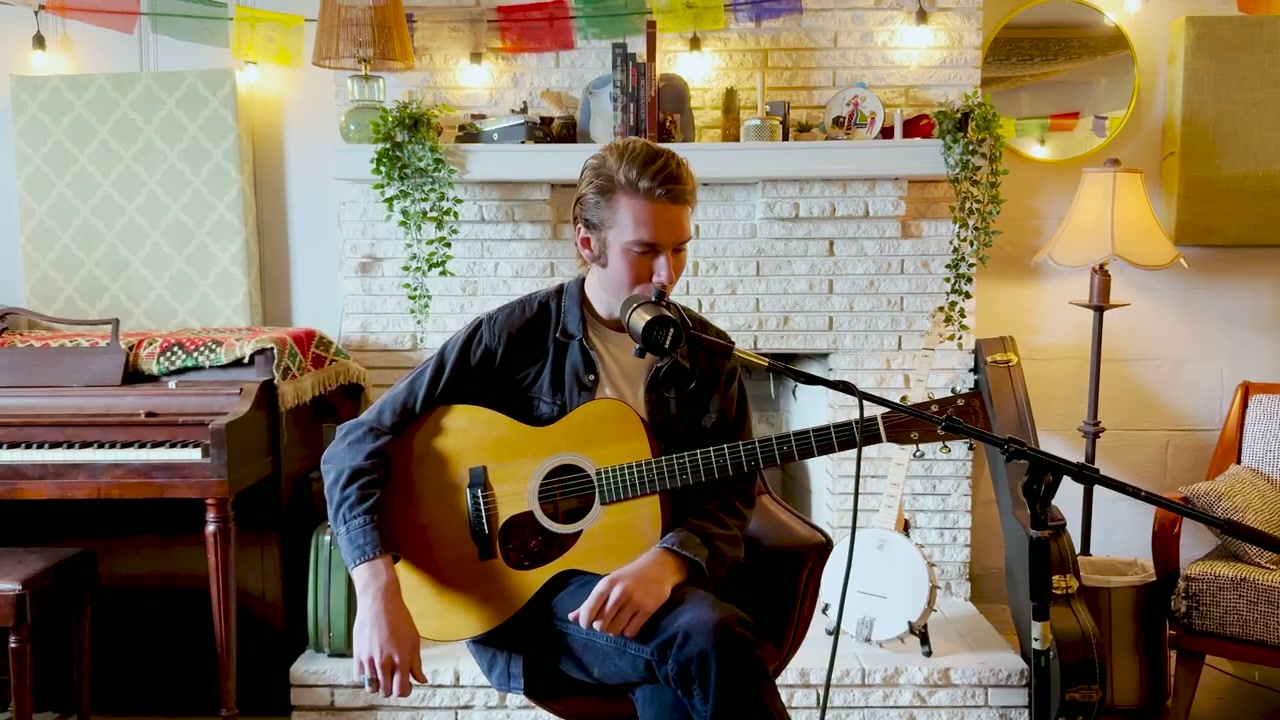
Harry teaches guitar on Tunelark. View Harry’s profile
Third, when a session starts to feel like a struggle, stop pushing and play a song you love and know well, purely to remember why you are here. Then bring the question of direction to your teacher: name what you want to be able to do next, and let them choose the fresh challenge that fits it.
Frequently Asked Questions
Why has my guitar playing stopped improving?
A plateau usually means you have gathered most of what your current material can teach you, so the returns on it have shrunk. It is a normal stage of learning rather than a sign that your talent has run out. On guitar the reliable restart is sideways rather than harder, and the four moves that cost nothing are under What to do the next time your playing stalls above.
How do I break through a music practice plateau?
Often the fastest route is to change what you practice: a new piece, a new technique, or a different style. Fresh material restarts visible progress, and the skills you build transfer back to the piece that stalled.
Is a plateau a sign I should quit?
Rarely. A flat patch is usually boredom or too much drilling on one thing, not a reason to stop. A conversation with your teacher about new directions is usually enough to restart momentum.
Should I just practice more to get past a plateau?
Usually not. Grinding the same passage harder tends to drain the enjoyment out of practice. Practicing differently, and protecting your curiosity, generally works better than simply practicing more.
How long do music plateaus usually last?
It varies, but they tend to lift once you re-engage with material that genuinely interests you. Some of your progress may be continuing in the background, and it becomes visible again when you return to the piece that stalled.
About Harry
Harry’s path to the guitar was set before he ever held one. What first drew him to the instrument was pure sense-memory: “The sweet smell of mahogany and formaldehyde emanating from my dad’s guitar cases.” The instrument was in the house, in the air, before it was ever in his hands.
Today Harry is a Nashville-based session guitarist, composer, and educator with over a decade of experience teaching, touring, and recording across North America. He holds a bachelor of music with honors, did graduate study in improvisation, and has shared stages with Grammy-winning artists. Much of his own playing is rooted in jazz and bluegrass, but his teaching deliberately centers on the concepts that serve any player at any level: learning music by ear, improvisation, music theory, reducing tension at the instrument, and exactly the kind of practice strategy this whole article is built around. He teaches online guitar lessons to everyone from total beginners to advanced players.
What still keeps the work fresh for him after years of teaching is a particular kind of moment. The thing that makes the job feel worth it, he says, is “when a student challenges me with a question I don’t have an answer to.” The teacher who lights up at being stumped is the same teacher who tells his students that growth lives in fresh challenges, not in grinding the familiar.
His favorite thing to teach carries that same spirit. “Autumn Leaves,” he says without hesitation. “It is such a perfect introduction to jazz harmony and motivic development, and even after playing and teaching this song my whole life I’m still excited to play it.” A teacher who can return to one standard for decades and still find it new is, fittingly, living proof of his own advice about coming back to old material with a fresh attitude.
And the largest lesson the years have handed him is this: “Given the tools, everyone has the ability to make something original.”
Performance · Time After Time
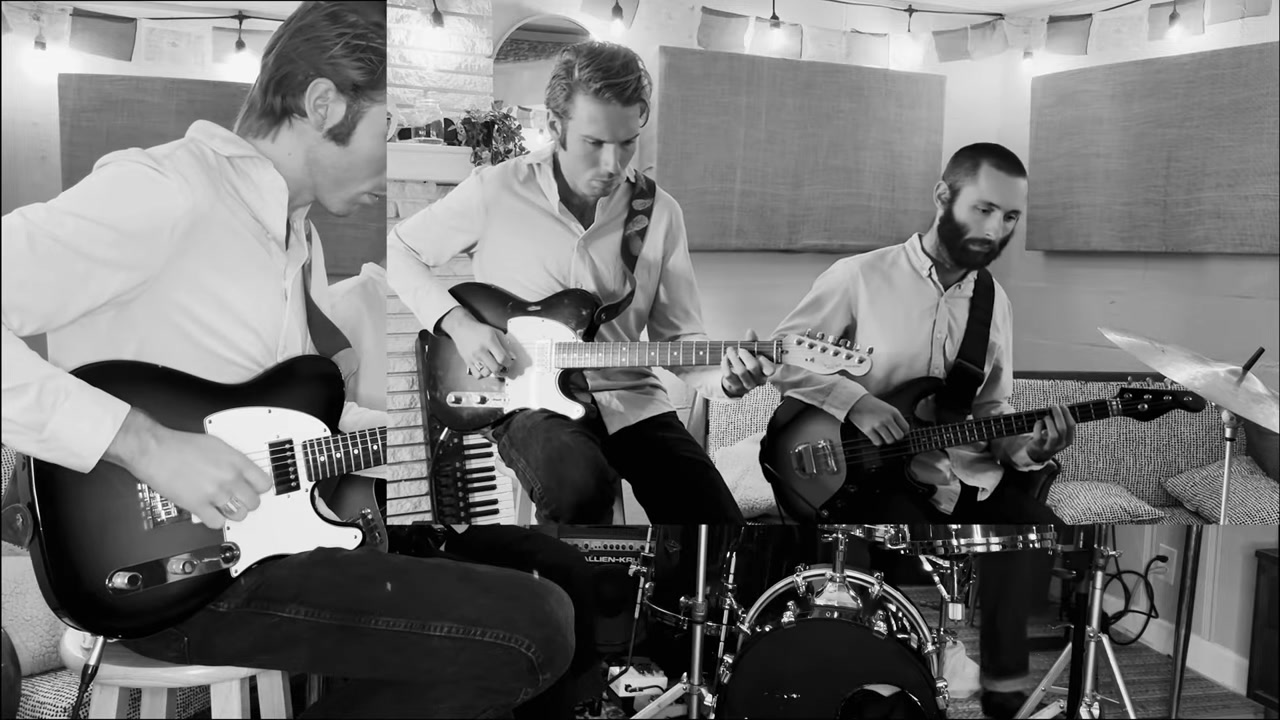
Harry plays Time After Time. View Harry’s profile
Ready to get unstuck?
If your playing has flattened out and pushing harder has not moved it, the problem may not be your discipline at all. It may simply be time to point your curiosity somewhere new, with someone watching the whole arc of your progress and choosing the next challenge before boredom has a chance to set in. Harry is currently accepting new guitar students at Tunelark.
Looking for an online guitar teacher? See our full Online Guitar and Bass Lessons page for everything you need to know about getting started.
Keep reading
About Jennifer Heath
I'm Jennifer Heath, VP of Operations at Tunelark and a lifelong singer. I joined the company in 2020 and oversee much of what makes Tunelark work for students and teachers: hiring, training and supporting our instructors, student support, marketing and day-to-day operations. I started voice lessons at 7 and sang with touring choirs through my teens. Music belongs in every life, for the self-expression, the discipline, the comfort and the simple joy of it.