How to Start Improvising on Guitar: From a Twelve-Bar to Your First Solo
Improvising looks like the thing guitarists are born able to do or not. Somebody counts in, a player closes their eyes, and notes come out that were not written anywhere. What is actually happening is a small number of learned things running at once: a form the player knows by heart, a scale they can find anywhere on the neck, a handful of phrases they have borrowed and bent, and an ear for how a solo is shaped. Every one of those is teachable, and our guitar teachers teach them in roughly the order below.
This guide is that order. It starts with a form you can play on the first day, adds the scale and the neck, borrows a lick and builds one, and ends with what a good solo is doing. It assumes you know the scales well enough to find one position of the pentatonic. The rest is here.
Start with a form, not a scale
The first thing an improviser needs is not more notes. It is somewhere to put them. The twelve-bar blues is that place for most guitarists, because it is short, it repeats, it underlies an enormous amount of rock, country and pop, and its basic chords can be held with one finger.
Tony G. shows exactly that. Three two-string power chords, A, D and E, each held with the pointer finger on the second fret. Then the ring finger reaches to the fourth fret on the same string and back, which is the shuffle everyone recognizes. Then the count, one and two and three and four, and then the form: four bars of A, two of D, two of A, one of E, one of D, one of A, and a turnaround on the twelfth bar. He walks it bar by bar and then plays the whole cycle so you can hear the shape.
Skill video · Blues Basics
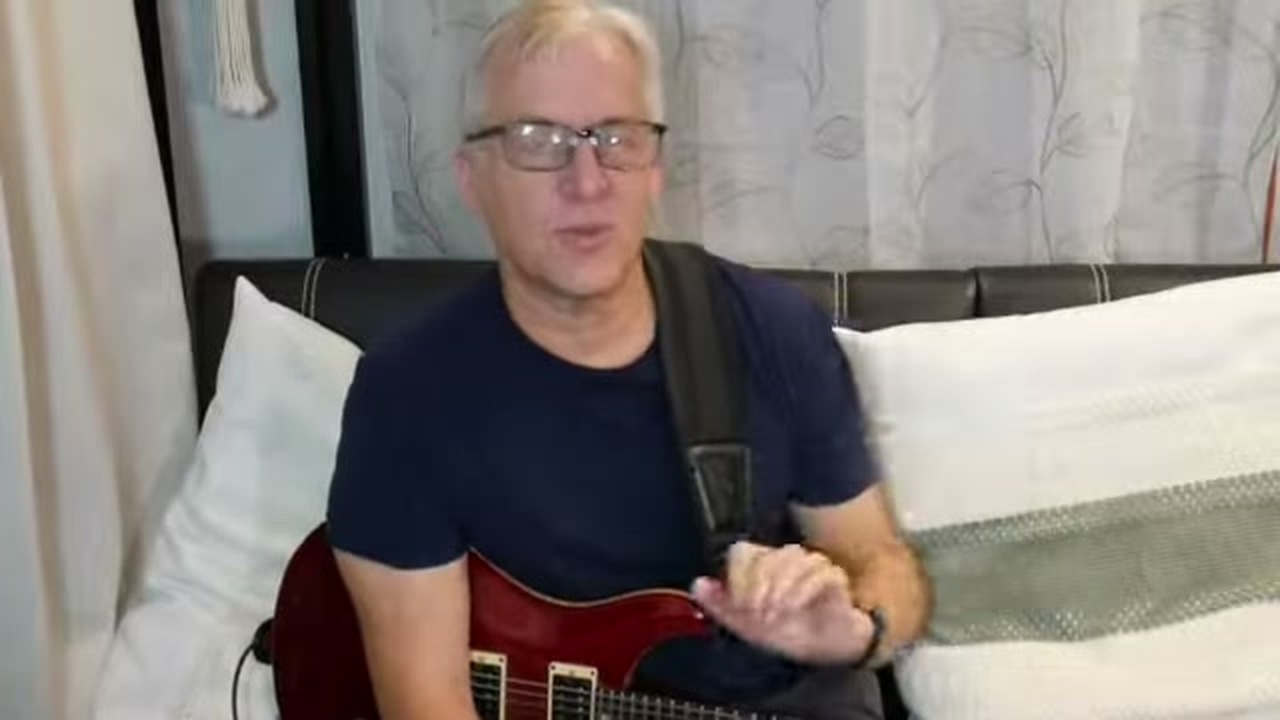
Tony teaches guitar on Tunelark. View Tony’s profile
Learn this until you can play it without counting out loud, and you have a form to improvise over for the rest of your life. Most of the soloing in this article sits over a form like this. If the open chords are still new, the five chords every beginner needs comes before this, and Tony’s blues is a fine first thing to play with them.
Get the scale out of its box
A form gives you the where. The scale gives you the what. Most players can find the minor pentatonic in one position within a week of starting on it, and most of them then solo in that one position for a year, because the five boxes run up and down the strings and nobody showed them the way across.
Matt S. shows the way across. The boxes already overlap on every string, so you can slide out of one and into the next instead of finishing the one you are in, starting with a single string and two boxes and building from there to the whole neck. The exercise in full, and the reason the shapes overlap the way they do, is worked through in guitar scales and the fretboard.
Skill video · Connecting Pentatonic Boxes
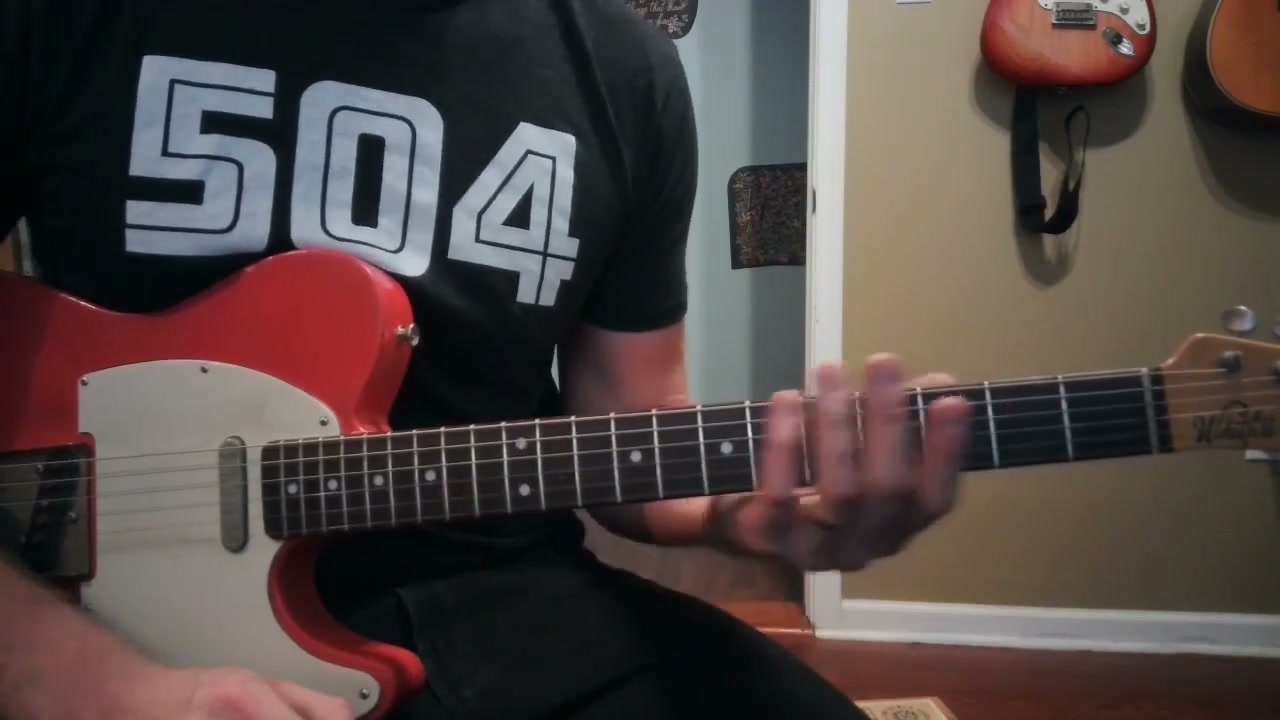
Matt teaches guitar on Tunelark. View Matt’s profile
For soloing, this matters more than any new scale. A player who can move between positions on any string can follow a phrase where it wants to go, climb toward a high note for the end of a chorus, and come back down to the low register to start again. The vocabulary of the solo is the same five notes; the neck is what makes them sound like more than five.
Listen to a solo the way a teacher does
Before borrowing phrases, it helps to know what you are borrowing them for. Peter J. takes a well-known blues solo apart, and the analysis is a short course in what makes a solo work. The notes first: the player stays inside the five pentatonic boxes over the minor groove, adds the flat five as an ornament, sliding and bending in and out of it, and leans on a raised sixth, which gives the line its Dorian color. Then the structure, which Peter argues matters more than the scale choice: a clear opening with phrases in question and answer, a patient climb into the higher register, a repeating three-note figure that builds tension right into the band’s change, three big bends on the change itself, and the flashiest run in the whole solo saved for one moment so it lands.
Skill video · Blues Solo Analysis
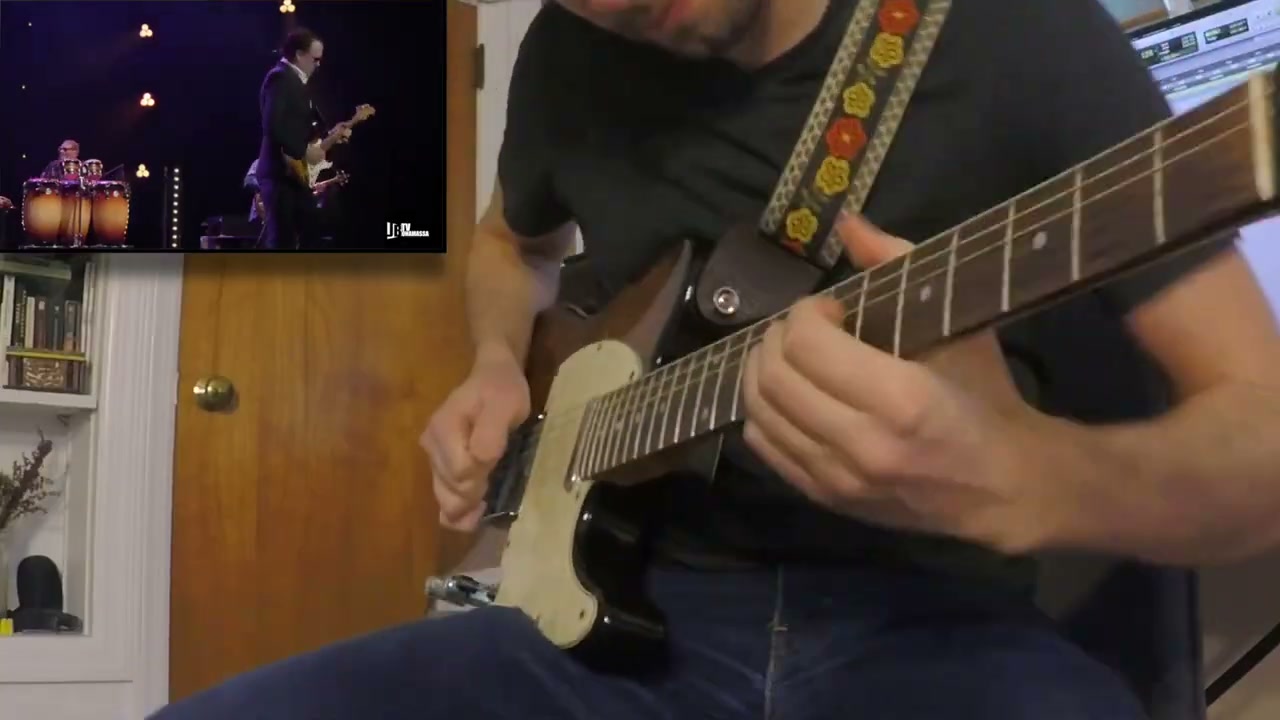
Peter teaches guitar and bass on Tunelark. View Peter’s profile
That is the checklist to hear in every solo you love: where the phrases breathe, where the register climbs, what repeats, and what is saved. A beginner’s solo usually fails on structure long before it fails on notes, and hearing structure in other people’s playing is how you start putting it in your own.
Borrow a lick, understand it, make your own
Every improviser starts by stealing. The difference between a player with a vocabulary and a player who runs scales is that the first one learned phrases from records, and the difference between a player with a vocabulary and an original one is that the original player understood what they stole.
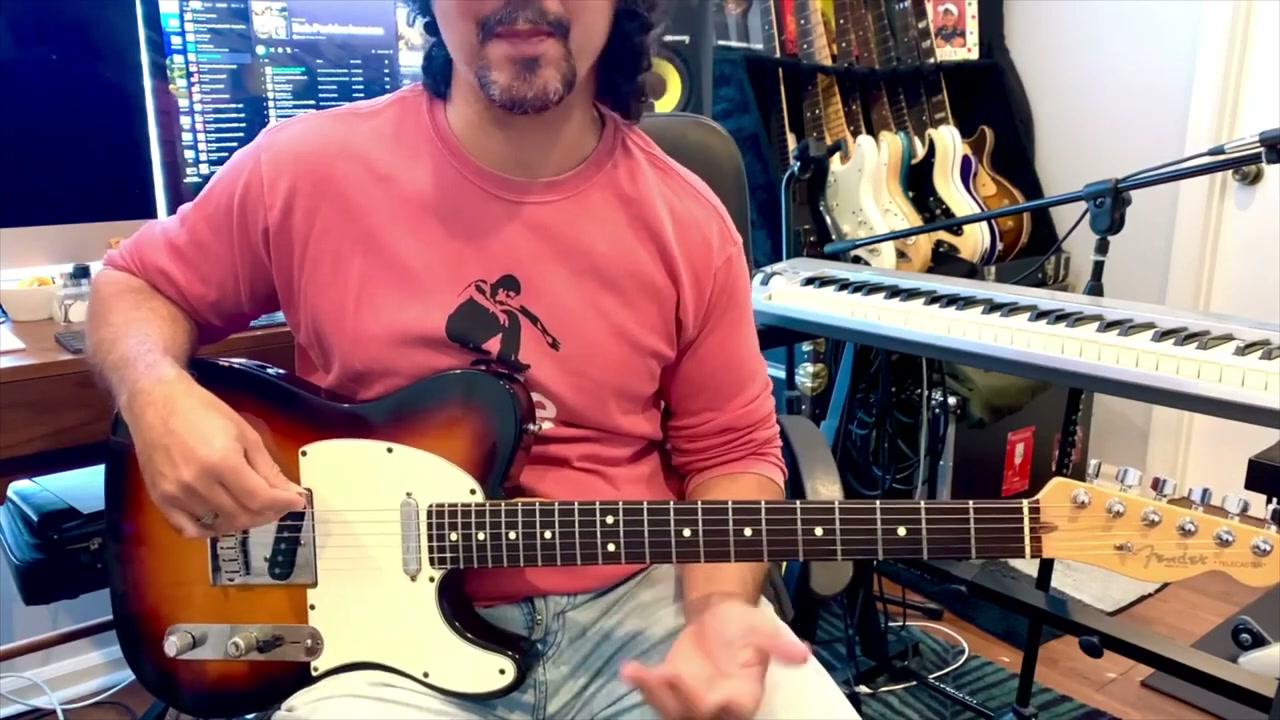
Alex P. does this on camera with a country lick from a player he admires. He learns it, then takes it apart: which scale it lives in, why the minor seventh gives the major pentatonic that country flavor, the little half-step move that makes the phrase sing, the open strings that let notes ring over each other. Then he builds a lick of his own from the same ingredients, over a simple arpeggio, and plays both over a backing track. His point is that understanding what is behind a lick is the first step to writing your own, and it is why his students learn licks and then are asked to make one.
Skill video · Creating Your Own Lick
Alex teaches guitar on Tunelark. View Alex’s profile
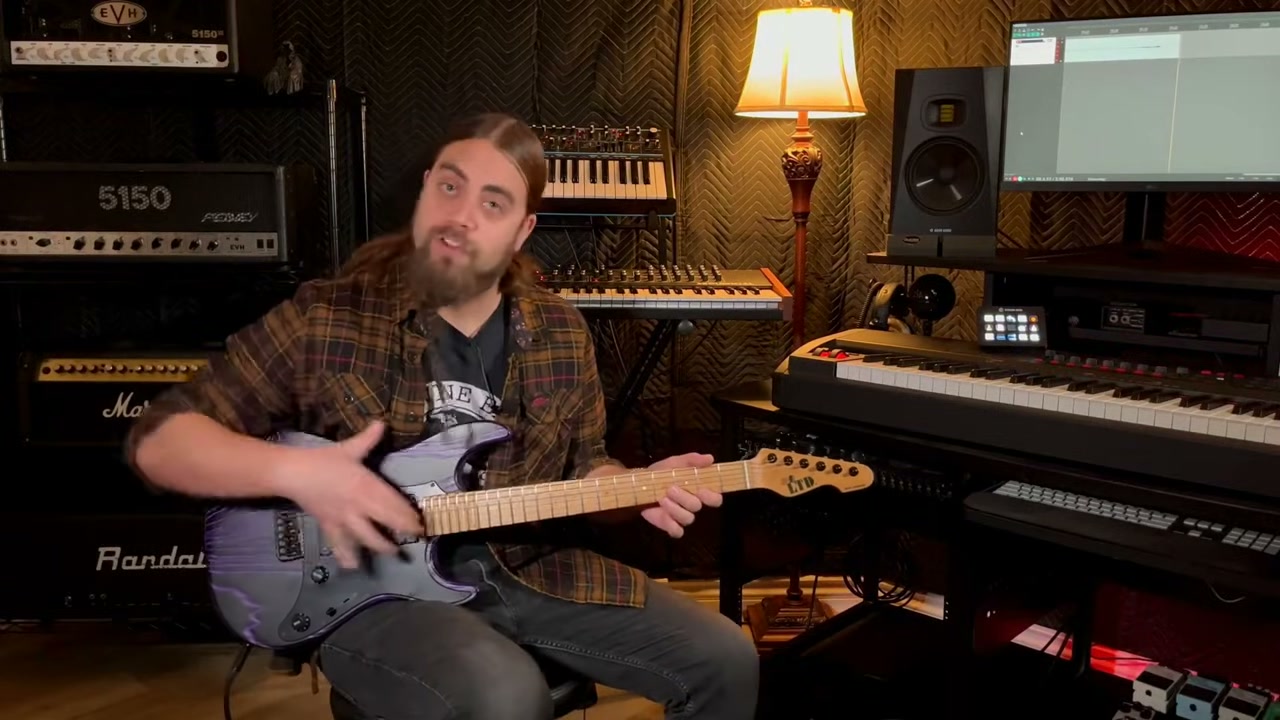
Jason W. shows the same instinct in under two minutes on a metal solo. The lick is a G major triad played as an arpeggio across the top two strings, two notes on one string and one on the other, in three shapes: root position and its two inversions. Rather than learning it as written, he takes those three shapes across all six strings, so one borrowed phrase becomes a map of the whole neck and a dozen new places to play it.
Skill video · Expanding on Licks
Jason teaches guitar on Tunelark. View Jason’s profile
Three habits come out of those two videos. Learn the lick exactly, first, slowly, from the recording or from tab; how to read guitar tabs covers the reading. Then find the scale and the chord it belongs to. Then change one thing: the rhythm, the starting note, the string set, the last note. The changed version is yours.
Where soloing goes next: the changes
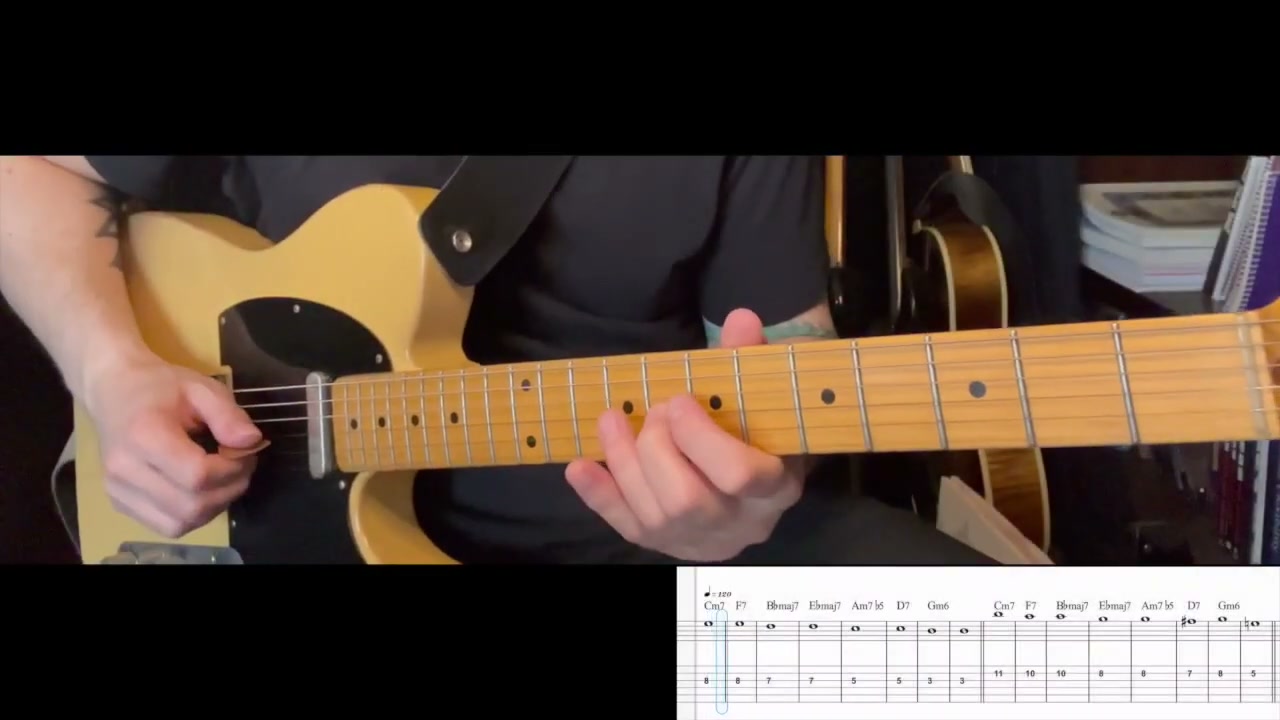
Everything above works over one key with the same scale throughout, which covers a great deal of music. The next step, and the one that separates blues and rock soloing from jazz, is following the chords as they change, and Justin P. gives a compact demonstration of the tool for it. Guide tones are the third and seventh of each chord, the two notes that define whether it is major or minor and where it wants to go. He names them for each chord in the first section of “Autumn Leaves,” then plays through the changes six ways, from bare thirds and sevenths to arpeggios, to scale runs that land on the guide tones, to something that finally sounds like a solo, with rhythm and rests.
Skill video · Guide Tones
Justin teaches guitar on Tunelark. View Justin’s profile
This is intermediate material, and it is here so you can hear where the road goes. A beginner does not need guide tones for a twelve-bar. A player who has spent a year on the pentatonic and wants to know why jazz players sound like they are following the chords has just heard the answer.
How to practice improvising
Play over something, always. A backing track, a looper with one chord, a friend on the twelve-bar, a recording of yourself strumming the changes. Improvising is a response to what is happening.
Limit yourself on purpose. One box for a week. Then two notes. Then one string. Then only long notes. Every limit forces you to make music out of rhythm and phrasing instead of running up and down the scale, which is the habit that makes beginner solos sound like exercises.
Leave space. A common beginner mistake is playing continuously. Peter’s analysis above is full of rests. Play a phrase, stop, hear the band, answer it.
Steal a phrase a week. One lick from a player you love, learned exactly, understood, changed. A year of that is a vocabulary. Which players and which songs is a conversation for a teacher who knows the style, and it is the conversation Alex describes in choosing your first real guitar song.
Record yourself. A phone on the music stand. The solo you thought was fine will have three ideas in it worth keeping and ten bars of running the scale, and hearing that is the fastest way to stop doing it.
Keep the fretting hand clean. Bends, slides and hammer-ons all live in the fretting hand technique, and a phrase played with a buzzing or muted note is not the phrase. If the solo has stopped improving after a few months, the answer is usually to change what you practice rather than to grind, which is the whole of Harry B.’s advice on plateaus.
Frequently Asked Questions
How do I start improvising on guitar as a beginner?
Learn a form you can play from memory, usually a twelve-bar blues, and one position of the minor pentatonic in the same key. Play over a backing track using only those five notes, leaving space between phrases. Add positions, licks and structure from there.
What scale should I use to improvise?
The minor pentatonic in the key of the song covers most rock, blues and pop. The major pentatonic gives a brighter, country sound over major keys. Everything else comes after those two are comfortable across the neck.
Do I need to know music theory to solo?
Enough to know what key the song is in and where one pentatonic position sits. The rest, why the notes work and how to follow the chords, can be learned as you go, and it is much easier to learn once you are already soloing.
How do I make my solos sound less like scales?
Leave space, repeat phrases, and limit yourself to a few notes so rhythm has to carry the line. Learn licks from players you love and change one thing about each. Record yourself and cut whatever is just running the scale.
What is a lick on guitar?
A short musical phrase, usually a bar or two, that a player has learned and can drop into a solo. Improvisers build a vocabulary of licks the way speakers build a vocabulary of phrases, then combine and alter them in the moment.
How long does it take to learn to improvise on guitar?
A beginner can improvise simple phrases over a twelve-bar within a month or two of learning one pentatonic position. Solos that sound intentional, with shape and space, usually take a year of regular playing over backing tracks. Following chord changes as they move is an intermediate skill that comes after.
Looking for an online guitar teacher? See our full Online Guitar and Bass Lessons page for everything you need to know about getting started.
Keep reading
About Jennifer Heath
I'm Jennifer Heath, VP of Operations at Tunelark and a lifelong singer. I joined the company in 2020 and oversee much of what makes Tunelark work for students and teachers: hiring, training and supporting our instructors, student support, marketing and day-to-day operations. I started voice lessons at 7 and sang with touring choirs through my teens. Music belongs in every life, for the self-expression, the discipline, the comfort and the simple joy of it.