How to Read Sheet Music: A Beginner’s Guide to the Staff
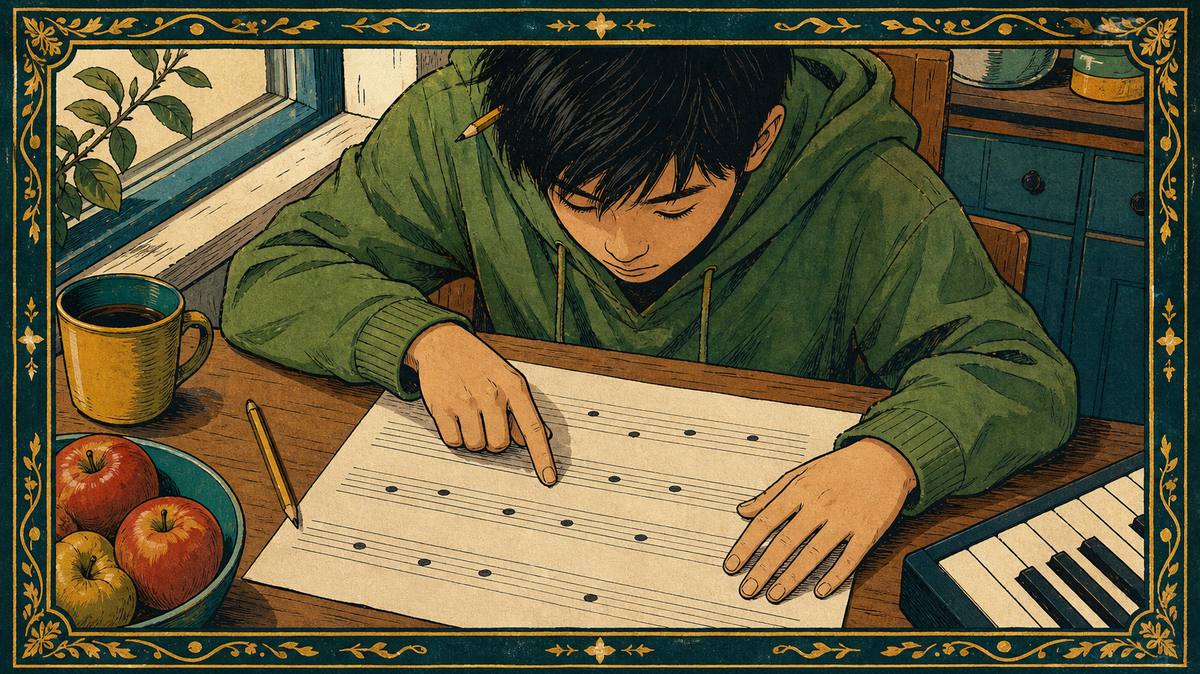
Reading music is a small system that looks like a large one. Five lines, two clefs, seven letter names, a handful of note shapes and two stacked numbers at the start of the line. Learn those and you can read the melody of almost anything written in the last three hundred years, slowly at first, then without thinking, the way you are reading this sentence. A trombone part is one of the gentler places to start, and our guide to learning the trombone explains why.
This guide covers the treble and bass staves, note names, rhythm, time signatures and the few symbols that show up on every page. It is written for piano and voice first, since those read both clefs, but every instrument uses the same system. Each section ends with a short self-check so you know whether it stuck. Drums are the exception worth knowing about, and our guide to reading drum music explains what the lines mean there instead.
The staff and the two clefs
Music is written on a staff: five lines and the four spaces between them. Higher on the staff means higher in pitch. That is the whole idea, and everything else is detail.
The symbol at the left end of the staff is the clef, and it tells you which letter each line stands for. The treble clef (the curly one) is used for higher sounds: the right hand on piano, higher voices, violin, flute, guitar. The bass clef (the one that looks like a backward C with two dots) is used for lower sounds: the left hand on piano, lower voices, cello, bass. Singers read whichever clef fits their range: sopranos and altos in treble, basses in bass, and tenors usually in treble with a small 8 below the clef, which means the line sounds an octave lower than it is written. That is why a choral score stacks both clefs. Piano music uses both at once, stacked, which is called the grand staff. Trumpet reads a single treble line, and our guide to learning the trumpet covers the seven fingerings behind it.
Self-check: cover the rest of the page and draw both clefs from memory on a scrap of paper. If the treble clef’s curl wraps around the second line from the bottom, you have it.
Note names on the treble clef
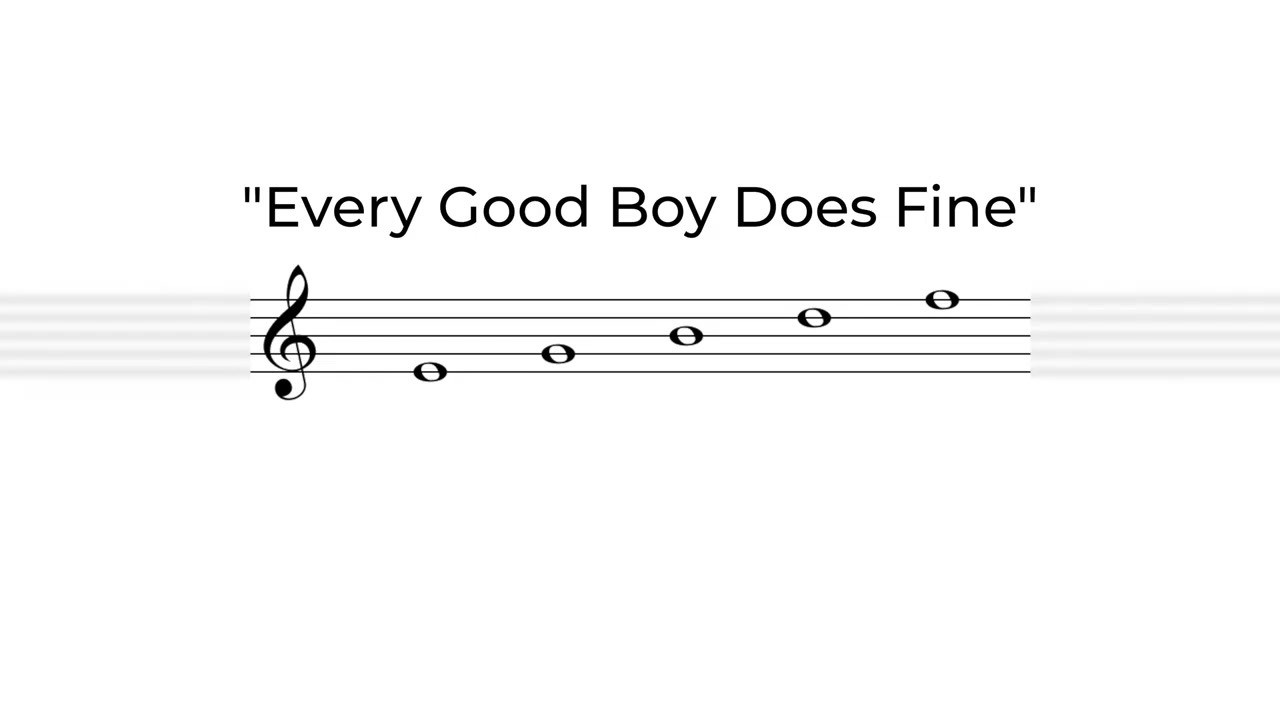
The lines of the treble clef, from the bottom up, are E, G, B, D and F. The traditional sentence is Every Good Boy Does Fine. The spaces, from the bottom up, spell FACE.
So a note sitting on the bottom line is E, in the first space is F, on the second line is G, and so on up the alphabet, line, space, line, space. Music only uses seven letters, A through G, and then starts over, so the note on the top line (F) is followed by G in the space above the staff.
Notes above or below the staff sit on short extra lines called ledger lines. Middle C, the note in the middle of the piano, sits on the first ledger line below the treble staff.
In a lesson recorded for the Tunelark channel, Joshua W. builds the treble clef up from the musical alphabet, the lines and then the spaces, with the same Every Good Boy Does Fine sentence. He treats the mnemonic as training wheels, something you stop needing once reading has had some practice.
Skill video · How to Read Notes on the Treble Clef
Joshua recorded this lesson for the Tunelark channel.
Self-check: find middle C on your instrument, then name the next five notes going up by the alphabet. C, D, E, F, G. Now find each on the staff: ledger line, space below the staff, bottom line, first space, second line.
Note names on the bass clef
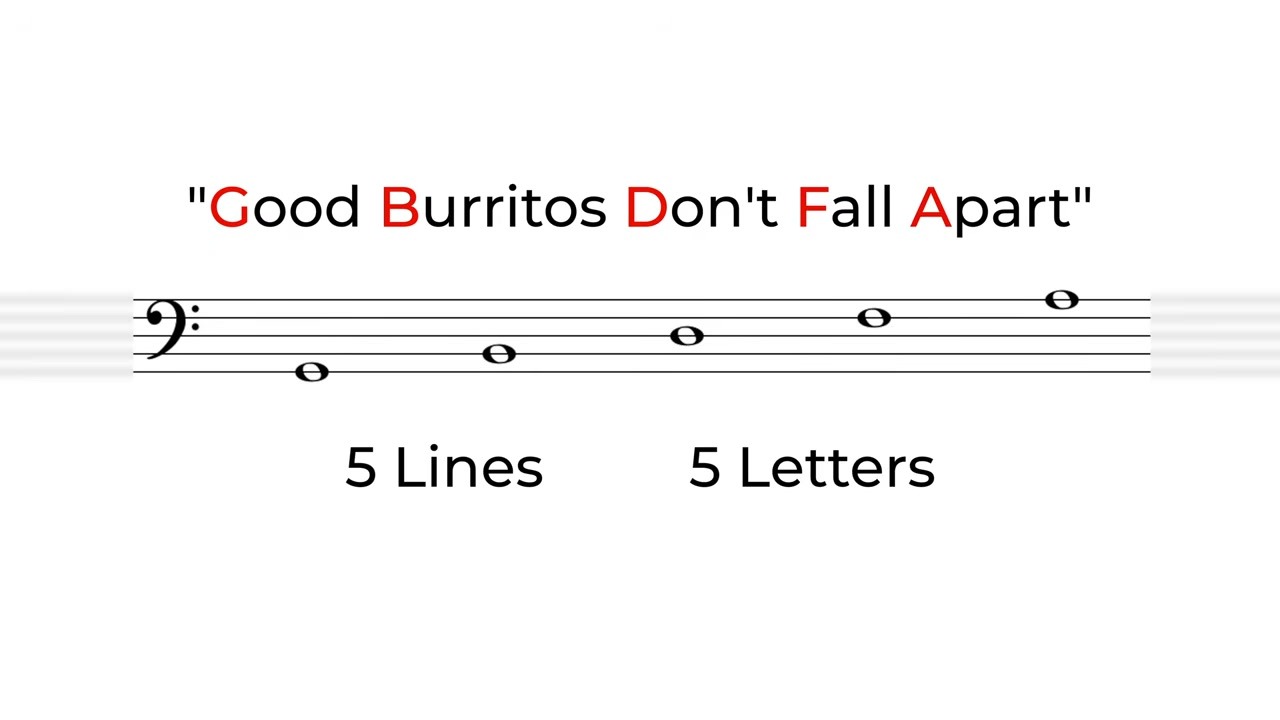
The bass clef lines, from the bottom up, are G, B, D, F and A: Good Boys Do Fine Always. The spaces are A, C, E and G: All Cows Eat Grass.
Middle C sits on the first ledger line above the bass staff. That is the hinge of the grand staff: the same note is just below the treble staff and just above the bass staff, and once you see that, the two clefs stop feeling like two separate systems.
Joshua builds the bass clef the same way. His sentence for the lines is Good Burritos Don’t Fall Apart where this guide uses Good Boys Do Fine Always, and either works, because both spell G, B, D, F, A. The spaces are All Cows Eat Grass in both.
Skill video · How to Read Notes on the Bass Clef
Joshua recorded this lesson for the Tunelark channel.
Self-check: name the notes on the bass clef lines from the top down. A, F, D, B, G.
How long each note lasts
Pitch is where a note sits. Rhythm is its shape.
- In the time signatures a beginner meets first, 4/4 and 3/4, the quarter note gets one beat, and every value below assumes that. A whole note is an empty oval with no stem and lasts four beats.
- A half note is an empty oval with a stem and lasts two beats.
- A quarter note is a filled oval with a stem and lasts one beat.
- An eighth note is a filled oval with a stem and a flag, or beamed to its neighbors, and lasts half a beat.
- A sixteenth note has two flags or two beams and lasts a quarter of a beat.
A dot after a note adds half its value: a dotted half note lasts three beats. A tie, a curved line joining two notes of the same pitch, adds them together into one longer sound.
Rests are silences with the same lengths: a whole rest hangs below a line, a half rest sits on top of one, a quarter rest is the squiggle, an eighth rest has one flag. A whole rest also means a whole bar of silence in any meter, so in 3/4 it lasts three beats.
Note values are counted in beats, so the beat has to be clear before the shapes mean anything. Joshua separates the two: the beat is the steady pulse, and rhythm is the pattern of long and short sounds played against it.
Skill video · Beat vs. Rhythm
Joshua recorded this lesson for the Tunelark channel.
Self-check: clap a bar of four quarter notes, then a bar of two half notes, then a bar of one whole note. Each bar should take the same amount of time.
Time signatures
The two stacked numbers at the start of the staff tell you how to count. The top number is how many beats are in each bar. The bottom number names the note value you count: 4 is a quarter note, 8 is an eighth note. In 4/4 and 3/4 the quarter note is also the beat you feel. In 6/8 the eighths group in threes, so you count six but feel two.
Four-four, often written as a large C for common time, is four quarter-note beats per bar and covers most pop, rock and classical music. Three-four is three beats per bar, the waltz count, and shows up in Amazing Grace and in many editions of Greensleeves. Six-eight is six eighth notes per bar, grouped in threes and felt as two big beats, which is what gives it that swaying, lilting motion: House of the Rising Sun, most jigs, and a lot of ballads. Hallelujah has the same lilt but is usually printed in 12/8, twelve eighth notes grouped in threes and felt as four big beats, which is a useful reminder that compound meters come in more than one size.
The vertical lines across the staff are bar lines, and the space between them is a bar (or measure). Every full bar holds exactly the number of beats the time signature promises, and that rule is what makes rhythm readable: if a bar in the middle of a piece looks wrong, count it. The one common exception is a pickup: a short first bar of one or two notes that leads into the first full bar. Traditionally the final bar is shortened by the same amount to balance it, and many editions still do that, but plenty of modern editions, hymnals and lead sheets print a full final bar instead, so expect either.
Self-check: pick any sheet of music, find the time signature, and count the beats in the first three full bars out loud. They should all add up. If the first bar is short, it is a pickup. Start counting from the next one.
Sharps, flats and key signatures
A sharp (the symbol that looks like a hashtag) raises a note by one half step, the next key to the right on a piano. A flat (the small b) lowers it by one half step. A natural cancels either. When these appear in the middle of a line they are accidentals and last until the end of that bar.
When a set of sharps or flats appears right after the clef, before the time signature, that is the key signature. It says: every one of these notes is sharp (or flat) for the whole piece unless told otherwise. One sharp means every F is F sharp, which points to G major or its relative minor, E minor; the last chord of the piece usually tells you which. One flat means every B is B flat: F major or D minor. You do not need to memorize the keys to start reading. You need to look at the key signature before you play, every time, and remember which notes it changes.
Self-check: find a piece with one sharp. Circle every F on the first line. Each one is an F sharp.
The symbols on every page
A few more marks show up constantly and are worth knowing on sight. Dynamics tell you how loud: p is soft, f is loud, mp and mf are in between, and a long wedge that opens up means grow louder. A dot above or below a note (staccato) means play it short. A curved line over a group of different notes (a slur) means play them smoothly, connected. A repeat sign, two dots beside a double bar line, sends you back. A fermata, the little eye over a note, means hold it longer than written.
How to practice reading
Read something every day, even for five minutes, and read it away from the instrument first: name the notes out loud, clap the rhythm, then play. Reading is a language skill, and the people who get fluent are the ones who read a little every day rather than a lot on Sunday.
Start with music that is slightly too easy. The goal is to read at a steady tempo without stopping, not to struggle heroically through something hard. When you can read a piece cleanly the first time, move up.
A game helps more than it sounds like it should. Tunelark’s treble clef game, Reading Between the Lines, drills note names against the clock, and our piece on whether music learning games work explains why timed recall is the right tool for exactly this job. For kids there is a wider set in our guide to music theory games.
Reading is also the doorway to everything else in theory. If you have wondered why music theory matters when you only want to play songs, the honest answer is that it starts here, with knowing what the page says. Adults who want the longer version can follow our guide to learning theory as an adult without the textbook. Guitarists have a parallel system, and our guide to reading guitar tabs covers it; tabs tell you where, the staff tells you what and for how long, and good players read both.
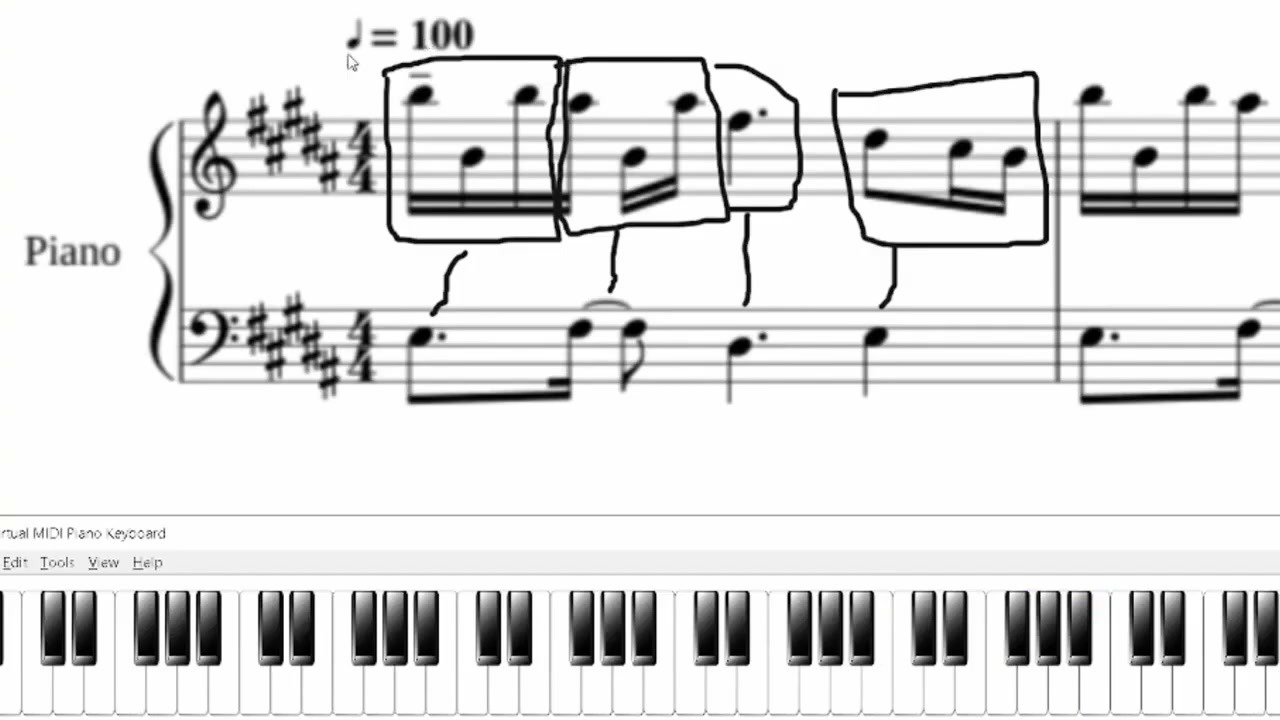
TJ F., who teaches piano on Tunelark, shows what reading a real song looks like. He takes the sheet music for A Thousand Miles and sorts each measure into three note groupings, so a bar becomes something you can digest. The song is a piano piece, and the habit of reading in groups carries to any instrument.
Piano lesson · Learning “A Thousand Miles”
TJ teaches piano, voice, guitar and bass lessons online with Tunelark. View TJ’s profile
A teacher’s role in all of this is mostly pacing: choosing music at the edge of what you can read, catching the rhythm mistakes you cannot hear yourself making, and stopping you from memorizing a piece and pretending you read it. That last one is the habit that keeps most self-taught players from ever reading fluently.
How to Find a Music Teacher on Tunelark
Tunelark connects you with deeply vetted music teachers who teach online across piano, guitar, voice, violin, drums and more. Vetting is run by working musicians and music teachers, not a general recruiter, and every teacher sets their own rate and shows it on their profile. Scheduling, billing and support are handled for you.
- Browse teachers for your instrument at tunelark.com/find-a-teacher.
- Read bios for teachers who mention reading, theory or classical training if fluency on the page is your goal.
- Book a trial lesson at $25 off the teacher’s 30-minute rate.
- Ask yourself afterward whether they had you read something, not just play something.
Frequently Asked Questions
How long does it take to learn to read sheet music?
For most beginners, note names and basic rhythms come in a week or two of daily five-minute practice, and reading simple melodies at a steady tempo takes one to three months. Fluency, reading ahead of your hands, takes a year or more of regular reading and is worth every bit of it.
What do the lines on the treble clef stand for?
From the bottom up: E, G, B, D, F, or Every Good Boy Does Fine. The spaces spell FACE.
What do the lines on the bass clef stand for?
From the bottom up: G, B, D, F, A, or Good Boys Do Fine Always. The spaces are A, C, E, G: All Cows Eat Grass.
Do I need to read music to play an instrument?
No, and many great players do not. But reading gives you independence from recordings and teachers, opens up classical and ensemble music, and makes learning new pieces dramatically faster. For piano it is close to essential, and for classical and choral singers it is expected.
Is reading music the same for every instrument?
The system is the same. Instruments differ in which clef they use and where the notes sit on the instrument. Guitar and bass also use tablature alongside standard notation.
Keep reading
About Jennifer Heath
I'm Jennifer Heath, VP of Operations at Tunelark and a lifelong singer. I joined the company in 2020 and oversee much of what makes Tunelark work for students and teachers: hiring, training and supporting our instructors, student support, marketing and day-to-day operations. I started voice lessons at 7 and sang with touring choirs through my teens. Music belongs in every life, for the self-expression, the discipline, the comfort and the simple joy of it.