How to Learn Jazz Guitar When You Come From Rock or Blues
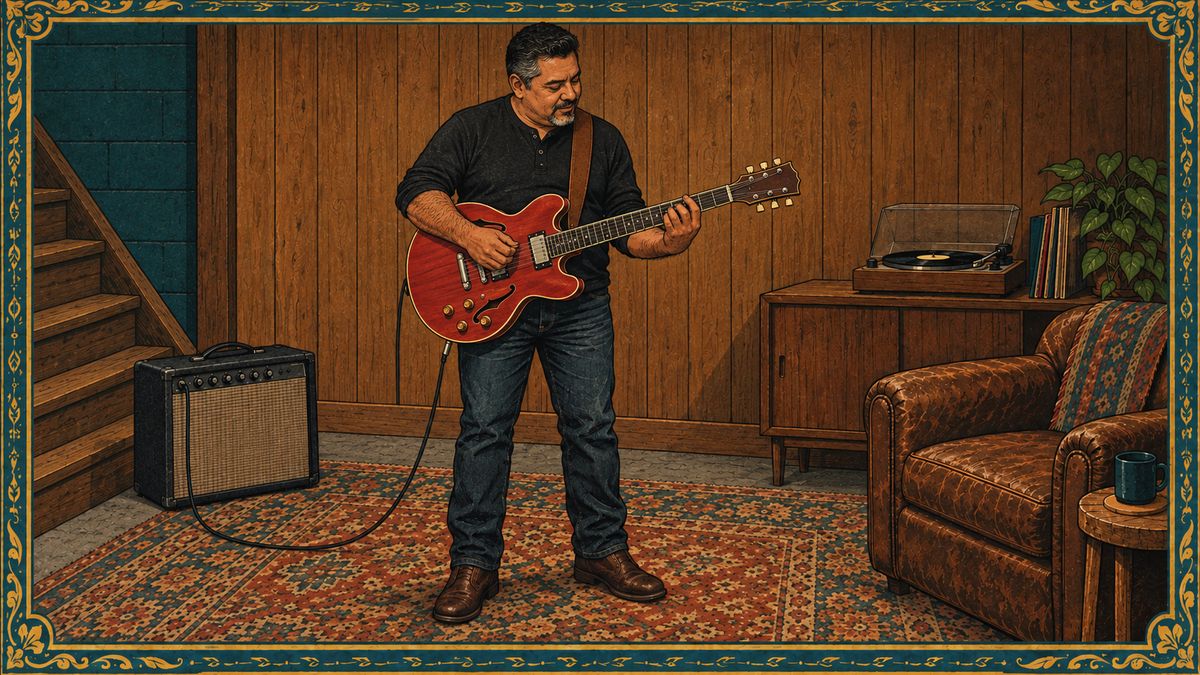
A lot of guitarists come to jazz sideways. They grew up on rock or blues, they can bend a note and play a solid rhythm part, and at some point they hear a jazz guitarist comp through a tune or take a solo and want to know how that works. Then they open a jazz chord book and meet a wall of shapes with names like C13 and F minor seven flat five, and it looks like starting the instrument over.
Pete P. teaches guitar at Tunelark and has lived on both sides of that wall. He holds a B.A. in Jazz Studies from the State University of New York at New Paltz and studied privately with the jazz guitarist and educator Ted Dunbar, and he has also spent decades playing rock, performing or recording with Rock and Roll Hall of Fame members including Levon Helm of The Band and Dizzy Reed of Guns N’ Roses. We asked him what carries over when a rock or blues player turns to jazz, what chords a player really needs to get started, how he teaches comping so it feels like music, and what he has new jazz guitarists listen to.
What carries over from rock and blues
“Everything is the same,” Pete says. “It’s all the same notes and fretboard.” Jazz, in his words, “just adds more options”: more scales and modes to play over chords, and more chord types to play.
For a blues player in particular, a lot of the ground is already familiar. Jazz grew up in New Orleans, where African American musicians drew on the blues, spirituals, ragtime and brass-band music, as the New Orleans Jazz National Historical Park’s history of jazz’s origins describes. Jazz musicians still play the blues constantly, and the twelve-bar form a blues guitarist knows by heart is the same form under a large body of jazz tunes. The dominant seventh chords that give a blues its sound are the chords Pete starts jazz players on. The minor pentatonic and blues scales a rock or blues player solos with still work over much of a jazz blues, and many jazz guitarists use them.
A rock player brings something else: a strong sense of time, a physical feel for the fretboard, and ears trained on riffs and chord changes. None of that is wasted.
What is new
Chord types. Rock leans on major and minor chords, power chords and the occasional dominant seventh. Jazz uses seventh chords almost everywhere, major seventh, minor seventh, dominant seventh and a few more, and often adds further color notes on top, the 9, 11 and 13, which are the same notes as the 2, 4 and 6 an octave higher.
Scales and modes. The seven modes of the major scale use the same notes but treat a different note as home. D Dorian uses the notes of C major with D as its tonal center. G Mixolydian uses them with G as home, which makes it a G major scale with a flat 7, F instead of F sharp. That flat 7 is why Mixolydian fits the dominant seventh sound a blues player already knows. Our article on guitar scales and the fretboard covers the scale shapes these ideas sit on.
Harmony that moves. A rock song often stays in one key and circles a few chords. The progression a new jazz player hears most is the ii-V-I, written in Roman numerals with lowercase for a minor chord: a minor seventh chord on the 2 of a major key, a dominant seventh on the 5, then a major seventh on the 1. In C, that is D minor 7, G7 and C major 7, and it confirms C as home. Jazz tunes also use the same move to travel to new keys, sometimes several times in one song, which is part of why the chords seem to keep changing.
Soloing over those changes is its own subject, and our guide to starting to improvise on guitar begins with the twelve-bar form a blues player already knows. This article stays with chords, which is where Pete starts.
The chords you actually need to start
Pete’s answer to the wall of chords is to start very small. “Just knowing 2 shapes for dominant 7 with the root note on each of the bottom 3 strings is a great foundation,” he says. That is two shapes with the root on each of the three lowest strings, E, A and D, six in all.
Then, referring back to his theory answer, he describes how he builds from there: “From there, I’ll use the approach mentioned above of morphing these shapes into all of the other chord types by knowing the scale degree for each note in the shape.” A player does not learn a separate picture for every chord in the book. They learn a few dominant seventh shapes well, know which finger holds the root, the 3, the 5 and the 7, and move one or two of those notes to make the other chord types. Our article on music theory for guitarists, also built on his interview, walks through that method from the beginning.
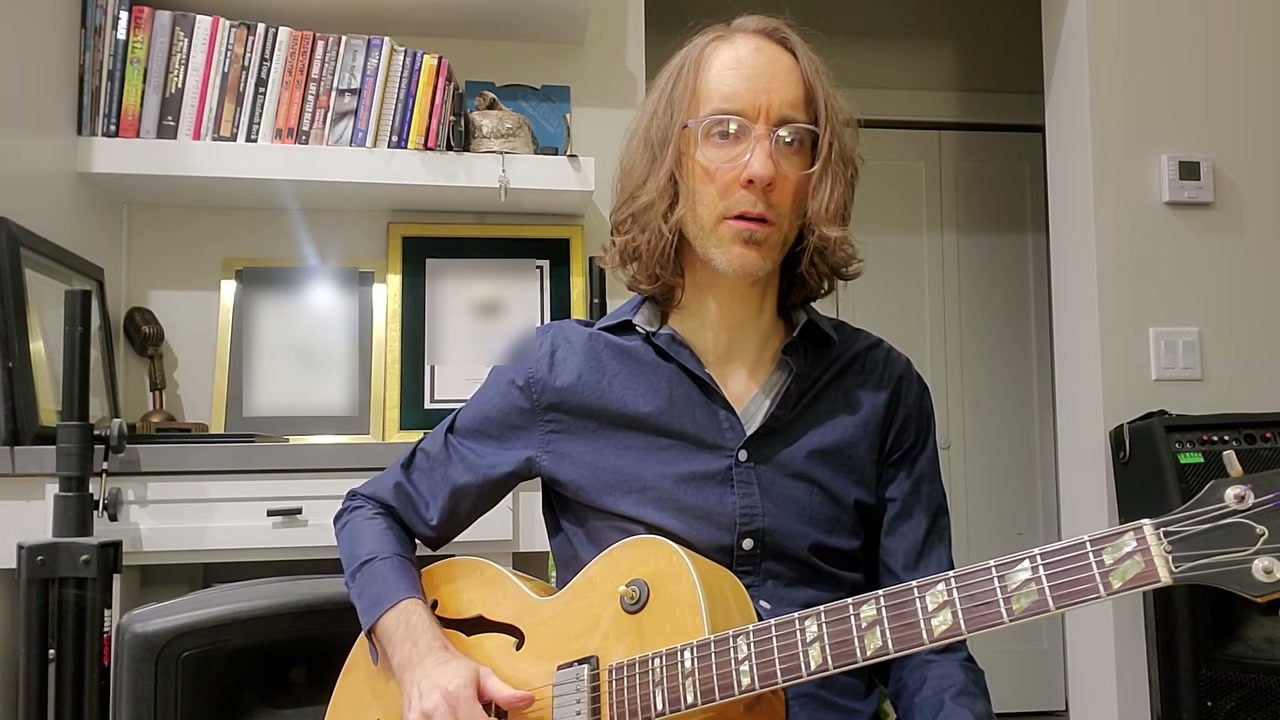
Here he shows how to add color to chords a player already knows: added 2s and 6s, suspended chords, and the altered colors jazz players use on seventh chords.
Skill video · Adding Tensions to Guitar Chords
Pete teaches guitar on Tunelark. View Pete’s profile
A worked example: three-note shells
A worked example of our own shows how far a small set of shapes can go. It is a smaller demonstration than Pete’s six, one shell rooted on the E string and one on the A string. Jazz guitarists often comp with shell voicings: three-note chords that keep only the root, the 3 and the 7, because those are the notes that do most to tell the ear what kind of chord it is. The 5 is left out.
- G7, root on the low E string: G, the root, on the low E string at the third fret. F, the flat 7, on the D string at the third fret. B, the 3, on the G string at the fourth fret. The A string and the top two strings are left silent.
- C7, root on the A string: C, the root, on the A string at the third fret. E, the 3, on the D string at the second fret. B flat, the flat 7, on the G string at the third fret. The low E and the top two strings are left silent.
G7, root on the low E string
C7, root on the A string
The unplayed strings stay quiet if the fretting fingers lean lightly against their neighbors, or you can pluck just the three notes with your fingers.
Now morph them the way Pete describes. In the G7 shell, raise the F on the D string one fret to F sharp and the chord becomes G major 7. Go back and lower the B on the G string one fret to B flat instead, and it becomes G minor 7. Every change is one finger moving one fret, and every shape slides along the same strings to any key.
With those moves, a ii-V-I in C becomes three small shapes a few frets apart:
1. D minor 7: D on the A string at the fifth fret, F on the D string at the third fret, C on the G string at the fifth fret.
2. G7: G on the low E string at the third fret, F on the D string at the third fret, B on the G string at the fourth fret.
3. C major 7: C on the A string at the third fret, E on the D string at the second fret, B on the G string at the fourth fret.
1. D minor 7
2. G7
3. C major 7
Play them in order and the upper two notes barely move. The F stays put from D minor 7 to G7, the C on the G string drops one fret to B, and that B stays put into C major 7 while the F slides down to E. That smooth movement between chords is a large part of what makes jazz comping sound like music rather than a series of unrelated shapes, and it comes from knowing what each note is.
Shells ask the fretting hand to hold and release shapes cleanly, often on short, clipped chords. Our guide to the fretting hand covers the relaxed pressure that makes that possible.
Teaching comping so it feels like music
Knowing the shapes is the quick part. “Feel takes much longer to become natural,” Pete says. “This involves technique training in the strumming/picking hand so that the music sounds natural and relaxed.”
Comping is rhythm work, and jazz guitar has more than one way to do it. Swing-era rhythm guitarists played a steady chord on every beat, four to the bar. Small-group players more often place shorter chords around the melody or the soloist, with space between them. Over a swing feel the eighth notes lean long and short rather than even, while bossa nova and some other jazz styles keep them straight. In every style the aim is to support the melody and respond to the soloist. Making that sound relaxed rather than stiff takes a trained picking or strumming hand as well as a lot of listening, which is why Pete puts feel in the longer part of the process.
What to listen to, and where to start
On listening, Pete starts wide. He plays new students a broad range of jazz styles and players so they can hone in on what they like and what they do not. “I don’t force anything,” he says. “If they don’t like bebop, I’ll spend one day on it and move on. Otherwise they will get frustrated.”
What guides the rest is the student. “I find what motivates and excites the student and blossom that.”
For anyone who wants a starting palette before their first lesson, here is one way to cover the range, with what to listen for in each. This list is ours, not a syllabus of Pete’s:
- Early electric single-note lines: Charlie Christian, who brought the electric guitar to the front of the band.
- Acoustic swing: Django Reinhardt’s recordings with the Quintette du Hot Club de France.
- Octaves and melody: Wes Montgomery, famous for playing with his thumb.
- Blues-soaked jazz: Kenny Burrell and Grant Green.
- Space and interplay: Jim Hall.
- Solo chord melody: the unaccompanied recordings of Joe Pass.
- Contemporary sounds: John Scofield, whose playing draws heavily on blues and funk, and Pat Metheny.
Two of those players, Django Reinhardt and Wes Montgomery, appear in our look at the guitarists who changed the instrument, which explains what each one solved.
For first tunes, a player from the blues has an obvious way in: jazz tunes built on the twelve-bar blues, such as Thelonious Monk’s “Blue Monk” and Sonny Rollins’s “Tenor Madness”, use the form they already know with jazz chords added. A standard such as “Autumn Leaves”, which moves through ii-V-I progressions again and again in both major and minor, is a common next step for practicing those changes. None of that is fixed. The point of Pete’s approach is that the student’s own taste decides which door they walk through.
About Pete
Pete holds a B.A. in Jazz Studies from the State University of New York at New Paltz, studied privately with the jazz guitarist Ted Dunbar, and has been playing guitar for more than 42 years and teaching for more than 31, including at Rutgers University and Swallow Hill Music.
He has performed or recorded with Rock and Roll Hall of Fame members Levon Helm of The Band and Dizzy Reed of Guns N’ Roses and with Steve Ferrone, longtime drummer of Tom Petty and the Heartbreakers, plays in Tasty Face with Angelo Moore of Fishbone, and has received a Grammy Award nomination certificate. His work has appeared on the Grammy Award ballot 12 times, and he has played the 27,000-seat StubHub Center in support of Kevin Costner & Modern West.
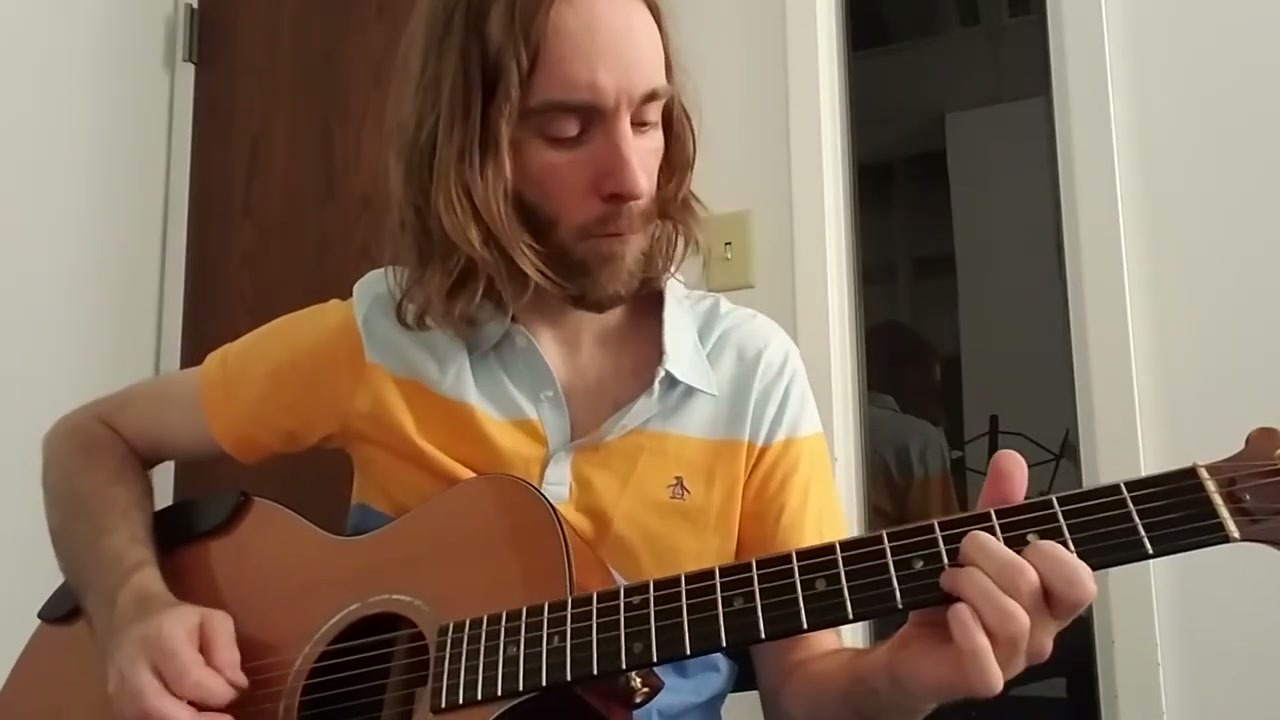
At Tunelark he teaches guitar to students aged 3 and up, beginner through advanced, in rock, blues, jazz, folk, country and metal, along with improvisation, music theory, songwriting and composition. His lessons are shaped around each student’s goals and the music they want to play. Here he is in performance, showing another side of his playing with Rik Emmett’s solo acoustic piece “Midsummer’s Daydream”.
Performance · Midsummer’s Daydream
Pete teaches guitar on Tunelark. View Pete’s profile
Ready to start on jazz guitar?
A rock or blues player already has much of what jazz guitar needs: the notes, the fretboard, a sense of time and, for a blues player, the form and the dominant seventh sound at the center of it. What jazz adds is more chord types, more scales and modes, and new ways of comping and phrasing. A few dominant seventh shapes and the knowledge of what each note in them is are enough to start.
Pete is accepting new guitar students at Tunelark, and a couple of jazz recordings you like, or would like to understand, are a good thing to bring to a first lesson. You can also find a teacher for another instrument across the rest of the roster.
Frequently Asked Questions
Do I need a hollow-body guitar to play jazz?
No. Hollow-body archtops are traditional, but jazz can be played on a solid-body electric or an acoustic, and many guitarists start on the instrument they already own. Many jazz players favor a clean, warm tone, which most electric guitars can get close to.
Is jazz guitar harder than rock or blues guitar?
It depends on the music and the player. Jazz standards bring new chord types, progressions and rhythms, while rock and blues have demanding techniques of their own. A rock or blues player’s fretboard skills are a real head start.
What is comping in jazz guitar?
Comping is playing chords behind a soloist or singer. Jazz guitarists do it in several ways, from a steady chord on every beat to short chords placed around the melody.
Should I learn jazz scales or jazz chords first?
Chords are one practical first step, alongside plenty of listening, because knowing what the notes in each chord are makes the scales that go over it easier to understand and to hear.
Do I need to read music to play jazz guitar?
It helps. Jazz tunes are often shared as lead sheets, a melody on the staff with chord symbols above it, but many players start from chord symbols and recordings and add reading as they go.
Looking for an online guitar teacher? See our full Online Guitar and Bass Lessons page for everything you need to know about getting started.
Keep reading
About Jennifer Heath
I'm Jennifer Heath, VP of Operations at Tunelark and a lifelong singer. I joined the company in 2020 and oversee much of what makes Tunelark work for students and teachers: hiring, training and supporting our instructors, student support, marketing and day-to-day operations. I started voice lessons at 7 and sang with touring choirs through my teens. Music belongs in every life, for the self-expression, the discipline, the comfort and the simple joy of it.