The 5 Best Guitarists of All Time, and What Makes Them Unique

These are five players whose ideas changed what the electric and jazz guitar could do. They each solved a specific creative problem in a way that changed the instrument, and each one is worth studying for a different reason. The classical and flamenco lineages are left for another article. Studying their approach doesn’t mean copying them. It means understanding what made them singular, and incorporating those lessons into your own playing.
1. Jimi Hendrix: Imagination Over Technique
Jimi Hendrix was not the most technically precise guitarist of his era. What he was, arguably, was the most imaginative. He treated the guitar as a sound-generating machine with no fixed rules, using feedback, vibrato bar manipulation, and unconventional chord voicings to create sounds no one had heard before.
The lesson: technique is a means to an end. Hendrix had strong enough fundamentals to execute his ideas, but he never let technical convention limit what he was willing to try. If you’re a player who gets stuck in patterns and licks, Hendrix is the antidote. Learn to play with sound itself, not just notes.
2. B.B. King: Every Note Matters
B.B. King built a legendary career playing fewer notes than almost any comparable guitarist. His approach was the opposite of busy. He was meticulous about space, timing, and the emotional weight of individual notes. His vibrato alone was instantly recognizable and endlessly expressive.
The lesson: restraint is a skill. Many developing guitarists measure progress by speed and complexity. B.B. King demonstrates that the opposite (knowing what to leave out, making every note count) is actually harder to develop and more musically powerful. Work on your vibrato. Work on your tone. Work on saying more with less.
Ready to find a guitar teacher? Find the right teacher and book a trial lesson on Tunelark.
3. Django Reinhardt: Constraint as Creativity
Django Reinhardt developed his singular style after a caravan fire left the third and fourth fingers of his fretting hand badly burned and permanently curled, with very little movement left in them. He played his single-note lines with just two fingers, bringing the damaged pair in only for certain chord shapes, and still became one of the most technically dazzling guitarists of the 20th century.
The lesson: constraints produce creativity. Many players assume that limitations (in technique, in gear, in time to practice) are obstacles. Django’s story suggests the opposite. Working within constraints forces you to develop your own solutions, your own voice. Don’t wait for ideal conditions to make music.
4. Eddie Van Halen: Rewrite the Rules
When Van Halen’s debut album arrived in 1978, guitarists genuinely couldn’t figure out what they were hearing. Eddie Van Halen did not invent two-handed tapping. Steve Hackett, Harvey Mandel and Emmett Chapman were all using some form of it before 1978. What Eddie did was take a fringe trick and turn it into the defining sound of rock guitar. Set alongside his harmonic sensibility and sheer speed, it redefined what the instrument could be. He didn’t improve on existing approaches. He made them temporarily irrelevant.
The lesson: originality matters as much as excellence. Van Halen was technically extraordinary, but what made him legendary was hearing what an obscure technique could become and building a whole vocabulary on top of it. Originality is far more often that than invention out of nothing. Study your influences deeply, then ask yourself what you bring that no one else does, including the things you already do without thinking of them as yours.
Jason W., who teaches guitar on Tunelark, takes one tapped arpeggio and moves it across chord types, from a dominant 7 to a minor-major 7: a single technique turned into several sounds in under twenty seconds.
Skill video · Tapping Arpeggios
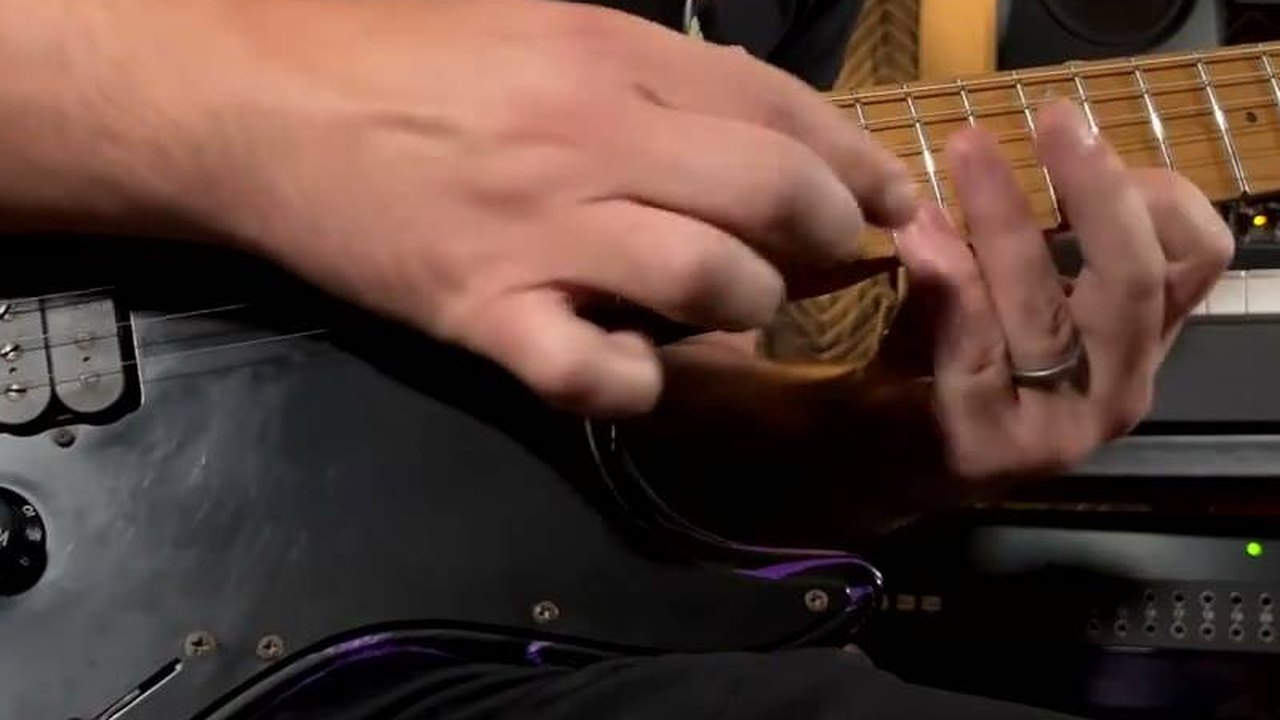
Jason teaches guitar on Tunelark. View Jason’s profile
5. Wes Montgomery: Tone Is Everything
Jazz guitarist Wes Montgomery played with his thumb instead of a pick, and the reason was practical. A pick was too loud for practicing late at night in an apartment, and the neighbors complained, so he taught himself to sound the strings with the side of his thumb instead. The warm, round tone that came out of that compromise was not what he set out to find. It was simply what he got. He heard that it was worth keeping, and he spent the rest of his career building a technique around it. The result was one of the most distinctive and beautiful tones in jazz guitar history. Our guide to learning jazz guitar from rock or blues suggests where to start listening.
The lesson: the sound that ends up being yours often arrives sideways. Nobody designs a signature tone in advance, and the players who end up with one are usually the ones who noticed what an ordinary problem handed them and then declined to trade it back for the standard version. Many players spend years playing other people’s ideas on instruments set up other people’s ways and never stop to ask which parts of their own sound they actually like. Develop your own sense of what beautiful sounds like on your instrument, and when a constraint hands you something, keep it.
How to Study a Player Without Copying Them
Copying is a stage, not a destination. The way past it is to work out what problem the player was solving. Hendrix was solving the problem of an instrument whose feedback and distortion were treated as mistakes rather than material. B.B. King was solving the problem of a single note having to carry an entire phrase. Once you can name the problem, you can solve it your own way, on your own instrument, with your own hands.
Learn one phrase properly rather than a whole solo badly. Slow it until it is clean, work out where it sits against the harmony, then play it in another key and over a different song. A lick you can only play in one place is a quotation. A lick you can move anywhere is yours.
Alex P., who teaches guitar on Tunelark, works through a country lick taken from a Brent Mason masterclass, finds what is going on underneath it, and uses it as the source for a new lick over a D chord progression.
Skill video · Creating Your Own Lick
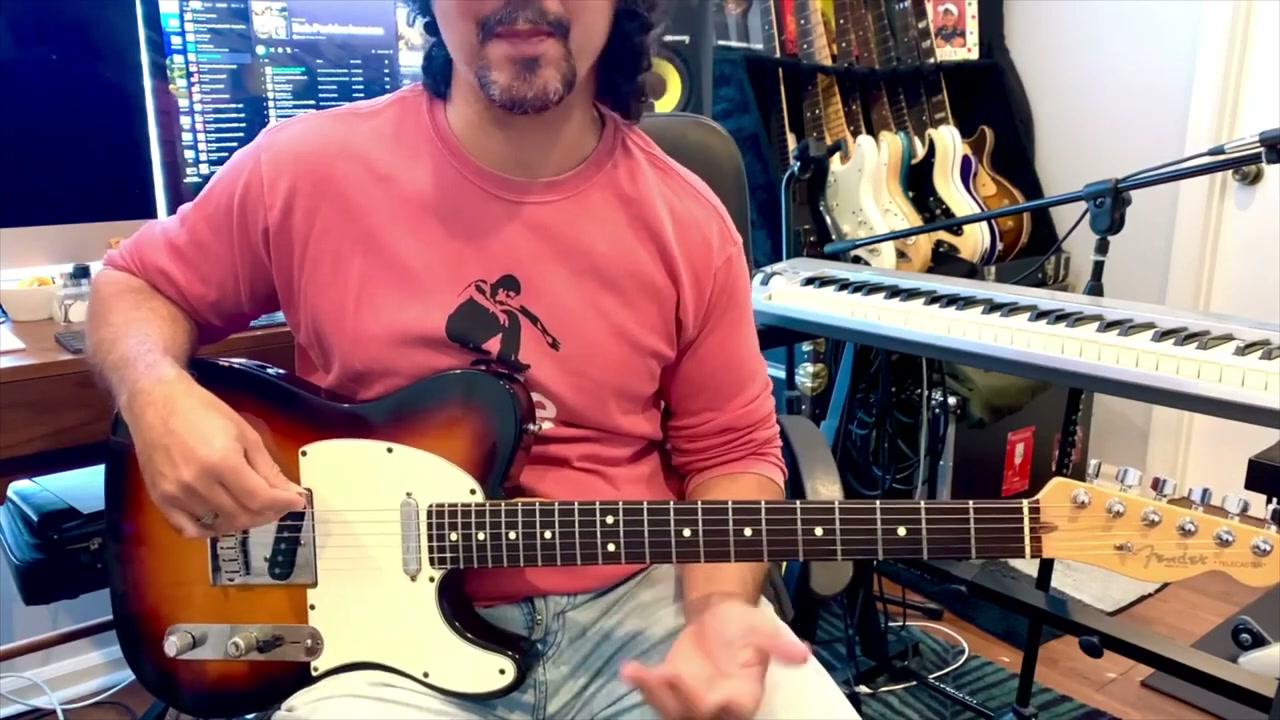
Alex teaches guitar on Tunelark. View Alex’s profile
Use your ears before you use tab. Working a phrase out by listening is slower for the first month and considerably faster after that, because it builds the connection that lets you play what you hear instead of what you memorized.
Turning These Lessons Into Practice
Each of these players suggests something you can do this week. For Hendrix, spend five minutes on one short phrase and change only the sound: pickup selection, tone control, and where you pick between the bridge and the neck. For B.B. King, improvise for two minutes using five notes and nothing else, and put all of the effort into vibrato and space.
For Django Reinhardt, set a constraint and stay inside it: two fingers, or one string, or four bars. For Eddie Van Halen, learn a lick exactly, then change one thing about it, again and again, until one version sounds like you. For Wes Montgomery, play the same line with a pick and then with your thumb, and decide which one you actually prefer.
Record all of it. A recording is what a listener hears rather than what you feel while playing, and it is the fastest correction available to a guitarist working alone between lessons.
Frequently Asked Questions
Can I learn to play like any of these guitarists?
You can absolutely study their techniques, scales, and characteristic approaches. The deeper goal, though, is to absorb what makes each of them distinctive and develop your own voice by combining influences with your own personality as a player.
How long does it take to become a skilled guitarist?
With consistent practice and good instruction, most students play recognizable songs within a few months. Feeling genuinely capable and expressive typically takes one to two years of regular practice. The ceiling, as with all instruments, is essentially unlimited.
Should beginners study music theory?
Not immediately, but theory becomes increasingly valuable as you progress. Understanding scales, chord construction, and key relationships unlocks improvisation and helps you learn songs faster. A good teacher will introduce theory gradually.
Acoustic or electric guitar, which should I start with?
Both are valid starting points. Choose based on the music you actually want to play. Acoustic builds hand strength and works without an amp. Electric has lighter strings, which some beginners find physically easier.
What’s the best way to develop your own guitar style?
Your style emerges from the intersection of everything you’ve absorbed and everything you naturally gravitate toward. To find out what that is, put yourself in situations that force a choice: play with other musicians who will not play it the way you would, take one phrase into a style you do not normally touch, and keep the version that sounds like you rather than the one that sounds correct. A teacher can help you identify and develop what makes your playing distinctive.
How do I practice more effectively?
One exercise per player is in the section above. The habit behind all five: isolate what is hard, slow it down, and record yourself.
Keep reading
About Jennifer Heath
I'm Jennifer Heath, VP of Operations at Tunelark and a lifelong singer. I joined the company in 2020 and oversee much of what makes Tunelark work for students and teachers: hiring, training and supporting our instructors, student support, marketing and day-to-day operations. I started voice lessons at 7 and sang with touring choirs through my teens. Music belongs in every life, for the self-expression, the discipline, the comfort and the simple joy of it.
About Tunelark
Tunelark is a community of inspiring, professional music instructors. Our shared vision is to help our students connect with their intrinsic love of music and follow their curiosity to grow as musicians and people.
Lessons take place over video chat so that students can learn from the comfort and convenience of their own home.
Browse our community of expert teachers and pick the one who resonates most with your goals and learning style. As always, we guarantee a great match or your money back.
If you’re ready to get started with 1-on-1 online [instrument/skill] lessons, book your first lesson with a Tunelark instructor today. Your first lesson is 50% off!