Online Bass Lessons for Adults: A Returning-Player’s Guide
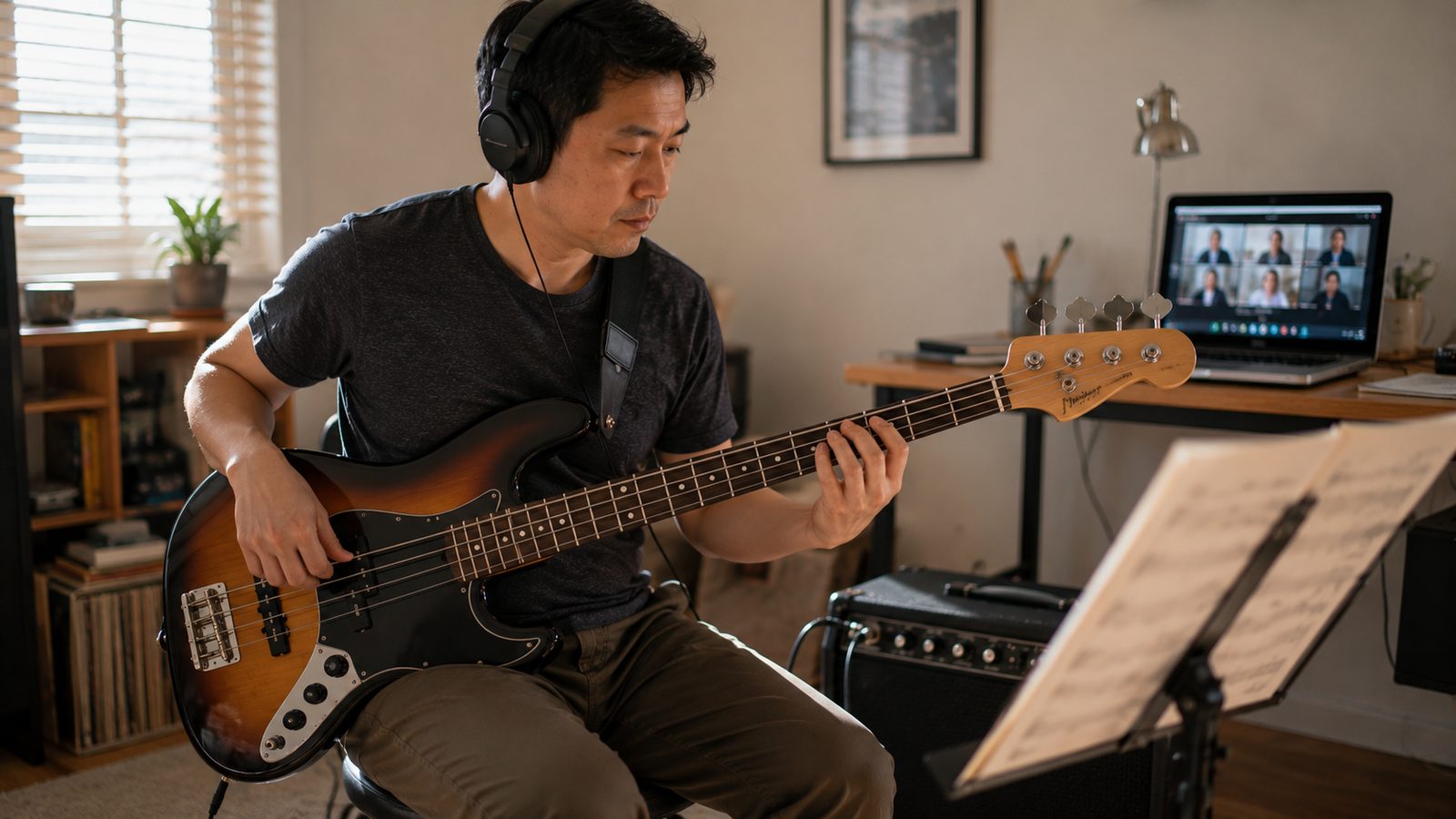
If you played bass in your twenties (in a band, in college, in your basement) and you’ve been thinking about coming back to it, bass is one of the most return-friendly instruments. The muscle memory survives in ways that surprise returning players. The grooves you used to lock into come back. The technique that you knew was sloppy back then is the part that needs real attention, but the foundation you built years ago is still there.
This guide is for returning players. If you have never played bass, start with our beginner bass tips.
Why Bass Is Return-Friendly
A few things about bass make it forgiving for returning players.
The physical motions live in the hands for a long time. Plucking patterns, the way your left hand shapes around the neck, the relationship between fingers and frets. Teachers who work with returning players see these come back first, often inside the first session or two, well before the repertoire or the reading does. Even if you haven’t picked up the instrument in twenty years, your hands often remember more than you’d expect.
The role is consistent. Bass plays roots, fifths, octaves, and walking patterns in most music. Whether you stopped playing classic rock, funk, jazz, or pop, the underlying vocabulary is similar enough that you can find your way back into songs you used to know.
Theory you learned stays useful. Even basic understanding of intervals, chord tones, and song structure carries forward. You don’t relearn music theory. You just refresh it.
The instrument is patient. Bass doesn’t demand the daily embouchure work of a wind instrument. Fretting-hand calluses do soften after a few weeks away and take two to four weeks of regular playing to rebuild, but the motions survive, so you can pick it up after time off and still play reasonably well.
For a broader read on coming back to music after a long break, our guide on restarting music lessons after years away covers the emotional and practical sides of return playing.
What Comes Back Faster Than You’d Expect
Returning bass players often say they are surprised by what reappears.
- Finger memory for old songs. Bass lines from songs you played dozens of times often return within minutes of picking up the instrument. The hands tend to find them before the memory does.
- Right-hand technique. Plucking patterns, the basic feel of the strings under your fingers, comes back fast.
- Groove sense. The ability to lock into a song’s pulse is a feel skill that doesn’t really fade. If you had it before, it’s still in you.
- Reading the fretboard. Knowing roughly where notes live on the neck comes back within a few weeks, even if specific note names take longer.
- Listening. The bassist’s ear (paying attention to drummers, to chord changes, to song structure) is a habit, and habits return quickly.
This is part of what makes returning so rewarding. The first few weeks back feel like waking something up rather than starting from scratch.
The note names are the slowest item on that list to return, and they can be relearned rather than waited for. Gillian H., who teaches bass on Tunelark, works through finding and naming the notes on the neck.
Skill video · Learning the Notes
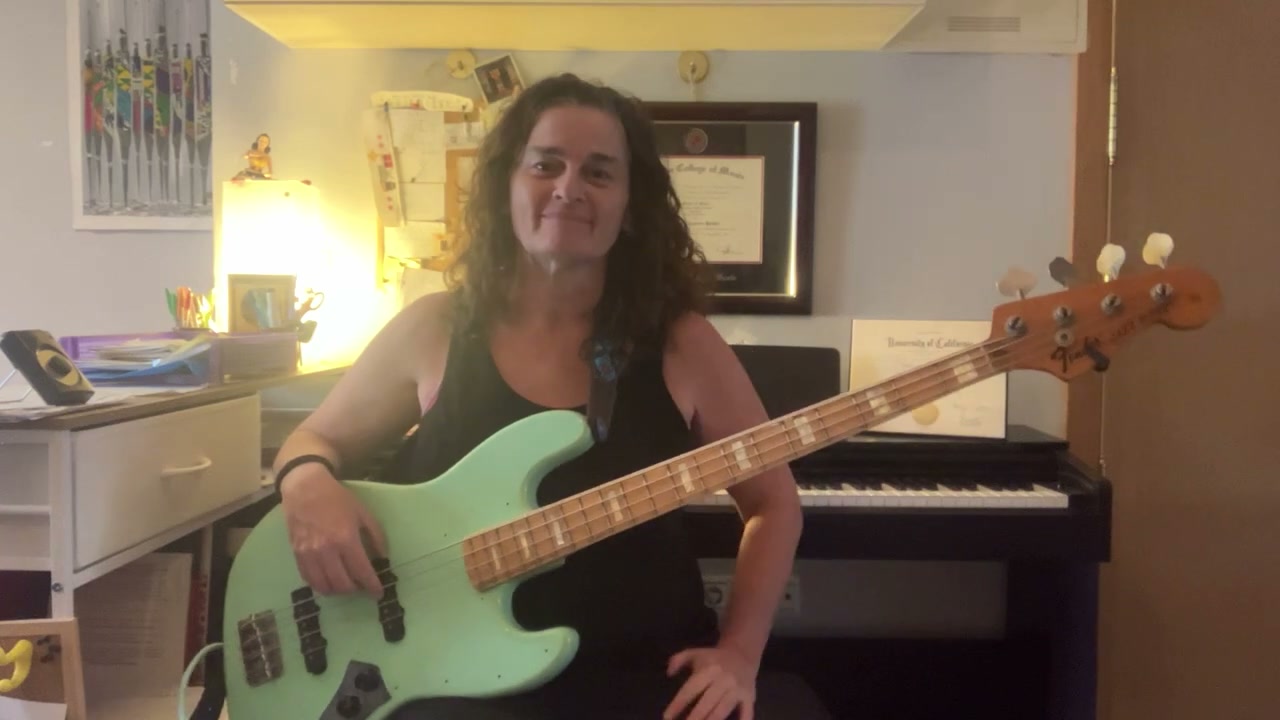
Gillian teaches bass lessons online with Tunelark. View Gillian’s profile
What You’ll Want to Relearn From Scratch
Most returning bass players had at least one or two technique habits that were unhelpful the first time around. They got away with it because they were young, or because they weren’t taking the instrument seriously enough to fix it. Coming back as an adult is a chance to do the work right.
Common areas worth treating as fresh learning:
- Left-hand technique. Many self-taught bass players in their twenties used too much pressure, didn’t use all four fingers, or placed their fingers inconsistently relative to the fret instead of just behind it. Cleaning this up takes a few months but transforms tone and accuracy.
- Right-hand consistency. Two-finger plucking that worked fine at moderate tempos often breaks down at faster ones. A teacher can spot and correct what you got away with before.
- Music reading. Many bass players coast on tablature and never become fluent at standard notation. Real reading opens up a much wider repertoire and makes you a far better band member.
- Theory deeper than chord roots. Knowing roots and fifths is enough to fake your way through a lot of songs. Knowing what’s happening underneath (modal context, chord substitutions, walking line construction) is what separates competent from versatile.
- Slap technique, if you want it. Slap is often something self-taught players approximate poorly. Real slap technique is a specific discipline worth learning properly.
The good news: this kind of work goes much faster as an adult returning player than it would for a first-time beginner. You have ears, theory awareness, and instincts that a new student would take years to build. Why learning music as an adult has specific advantages covers this dynamic more broadly.
The Right Teacher for Returning Bass Players
Returning adult bass players have specific needs that not every teacher is set up for. The right teacher will:
- Listen first. Before assigning anything, they’ll want to hear you play and understand what’s there. A teacher who launches into beginner curriculum without listening is the wrong teacher for you.
- Respect what you already know. You’re not starting fresh, and a teacher who treats you like a first-time beginner will frustrate you. Look for someone who can pick up where you are and build from there.
- Be honest about technique issues. A teacher who tells you everything is fine isn’t helping. The whole point of returning with a teacher is to fix what wasn’t right the first time.
- Have experience with adult students. Adults learn differently than kids, and a teacher who primarily works with kids may not have the right tools for you.
A Realistic Schedule for Getting Back Up to Speed
Returning bass players often want to know how long it’ll take to “be themselves” again. A rough timeline based on what teachers see with adult returning players:
Weeks 1-2: Motor memory waking up. Old songs returning, hands remembering their shapes, calluses rebuilding. You’ll be surprised how much is still there.
Months 1-3: Identifying what came back cleanly versus what came back rough. Working with a teacher to clean up technique that was always a bit off. This is where the most growth happens, because the work is fixing habits rather than only rebuilding what you already had.
Months 4-6: Settling into a regular practice rhythm. New repertoire, deeper theory, expanded technique. Your playing now starts to feel different from your twenties, cleaner, more conscious, with intentional choices rather than reflexes.
Months 6-12: Many players pass where they were the first time and get into territory they never quite reached. Playing with other musicians, sitting in, recording yourself: the things you maybe didn’t get to before.
Where you land inside that timeline depends less on how long you were away than on how much of the first round was self-taught. A player who had lessons and then stopped mostly needs the rust knocked off. A player who worked it out alone has habits to unpick as well as skills to rebuild, and that second job is what fills months one to three.
How to Find a Bass Teacher on Tunelark
Many Tunelark teachers specialize in adult bass students, including returning players. Here’s how to find the right teacher.
1. Open the teacher list and filter by your instrument.
2. Read bios. Look for teachers who mention adult students, returning players, or technique refinement.
3. Book a first lesson with one whose profile resonates. It is $25 off that teacher’s 30-minute rate.
4. In the trial, ask the teacher to identify two specific things in your current playing they’d want to work on. Their answer tells you whether they’re really listening.
Coming back to bass as an adult is one of the more rewarding things returning musicians do. The instrument welcomes you back, your hands remember, and the work you do this time around is the work that finally makes you the player you wanted to be.
Frequently Asked Questions
I haven’t played in 20 years. Is it too late to come back?
Not even slightly. Bass players who’ve been away for decades regularly come back to a satisfying level within months. Teachers who work with returning players routinely see the old motions come back well before the repertoire does, and your accumulated musical instincts as an adult listener serve you well.
Do I need to start with beginner lessons?
Almost certainly not. A good teacher will assess where you are and build from there. If a teacher insists on starting you from absolute basics without listening to your current playing first, find a different teacher.
Should I get my old bass set up before lessons?
Yes: if it hasn’t been played in years, a basic setup (new strings, intonation check, action adjustment) makes a big difference. A bass that fights you is harder to enjoy and slower to make progress on.
How often should I take lessons as a returning player?
Once a week is the standard cadence and works well. Some returning players do every other week if they’re practicing intensively between lessons. Less frequent than that usually doesn’t provide enough course-correction in the early months.
Will online bass lessons work for adults?
Yes, and the format suits adults who manage their own schedule and practice space. The technology works well for bass specifically because both hands are visible on camera, and one setting, original sound in your video app, keeps the low end of the instrument from being filtered out.
Looking for an online bass teacher? See our full Online Guitar and Bass Lessons page for everything you need to know about getting started.
Keep reading
About Jennifer Heath
I'm Jennifer Heath, VP of Operations at Tunelark and a lifelong singer. I joined the company in 2020 and oversee much of what makes Tunelark work for students and teachers: hiring, training and supporting our instructors, student support, marketing and day-to-day operations. I started voice lessons at 7 and sang with touring choirs through my teens. Music belongs in every life, for the self-expression, the discipline, the comfort and the simple joy of it.